




















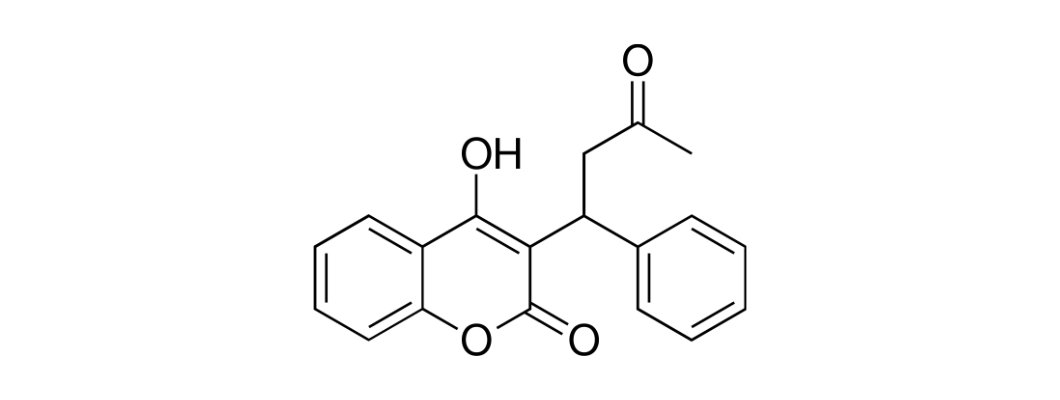
Title image above of the warfarin molecule is attributed to Calvero, Public domain, via Wikimedia Commons
(This article is loosely based on one originally published 15th March 2019 here on an animal breeding blog I wrote from 2017-2019. Every single image in that blog, including the maths ones, was drawn or written by me.)
This modification published here 4th March 2026.
This post came to mind following the recently revised Update: An Effective, Homemade Rodenticide.
It was only intended to be short, in a “fun factoid” kind of way, but like everything in science, requires some background knowledge in ground-level genetics.
So that didn’t happen, but here goes anyway!
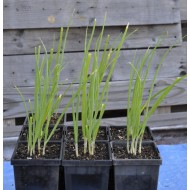
Genetics courses always begin with Mendelian inheritance, named for (not by) Gregor Mendel, who first observed and described this pattern of genetic inheritance in the culinary pea Pisum sativum. Mendel was an Austrian monk who began this groundbreaking work in 1858 and published his findings in 1866. This work sadly went completely unrecognised until its rediscovery in 1900, sixteen years after his death in 1884. Mendel is now regarded as the father of genetics.
Very, very simply, Mendelian inheritance is about dominant and recessive genes.
Anything with two copies* of a dominant gene** will express the dominant trait, and can only pass the dominant gene to its progeny. We say this organism is homozygous dominant and has a homozygous genotype for the dominant gene.
* This is what people learn, but in the plant world it is very common for many species to have multiple copies of a gene. Six, eight, or even more copies is not unusual! This polyploidy complicates things exponentially and will be skipped over here.
** The more accurate word here is allele, or version of a gene if you like.
Anything with two copies of a recessive gene will express the recessive trait, and can only pass the recessive gene to its progeny. We say this organism is homozygous recessive and has a homozygous genotype for the recessive gene.
Anything with one dominant gene and one recessive gene expresses the dominant trait, but can pass either gene to its progeny. We say this organism is heterozygous dominant and has a heterozygous genotype.
This is classic Mendelian inheritance, and introductory genetics pretty much ends there.
But as genetics became a scientific field in its own right, and more deeply studied, it soon became apparent that not every inherited trait followed this simple pattern.
Some patterns of inheritance made no sense whatsoever until the concept of non-Mendelian inheritance was realised.
There are many types of non-Mendelian inheritance: partial dominance, codominance, sex-linked inheritance, epistasis, polyploidism, and several more besides.
Today’s post on rat resistance to warfarin is due to an interesting form of inheritance known as overdominance. It follows Mendelian inheritance, and yet doesn’t, making it too a form of non-Mendelian inheritance.
Overdominance is the phenomenon whereby the expression of the heterozygote outperforms that of the homozygous dominant genotype, and rat resistance to warfarin is an excellent example of this.
Warfarin thins the blood and prevents blood from clotting, and in high enough concentrations will cause fatal internal bleeding. Vitamin K is a blood-clotting agent essential in the diet and counters warfarin’s action.
The gene for warfarin resistance in rats is dominant, and both heterozygotes (one copy of the dominant gene) and homozygotes (two copies of the dominant gene) for this gene are unaffected by warfarin. However, rats homozygous for warfarin resistance need a higher level of vitamin K than they can get naturally. Thus rats homozygously not resistant to warfarin as well as rats homozygous for resistance will both succumb to warfarin. Those that are heterozygous for resistance do not succumb. The warfarin-resistant gene is overdominant with respect to rat survivability: rats heterozygous for warfarin resistance outperform (survive) rats homozygous for warfarin resistance.
Overdominance in general may also explain the phenomenon of hybrid vigour, also known as heterosis. One possible reason could be that some genes (really the alleles, or versions of a gene) from one breed override the corresponding, more harmful, alleles of the other breed, and vice-versa. Collectively these may improve the hybrid’s overall performance (its “vigour”), and cause it to outperform its homozygous purebred parents.
Some cattle breeds are routinely crossed for this “best of both breeds” outcome — the crossbred Black Baldy in Australia is just one example. It is a cross of Hereford bulls with Aberdeen Angus cows, and the offspring tend to be healthier, faster-growing, of better maternal instinct, and are often more productive, and for longer, than their purebred parents.

Leave a Comment