





Title image above is copyright © Kristi Ellinopoullos
First published 21st March 2026
This post is an extract from Update: Aerial Rootin' Shootin' Sugarcane.
Back on the 16th March, after writing [that post], I cut that stem into two pieces to pot up. Here I’ve laid the two pieces side by side such that the bottom half is in the same orientation as the top.
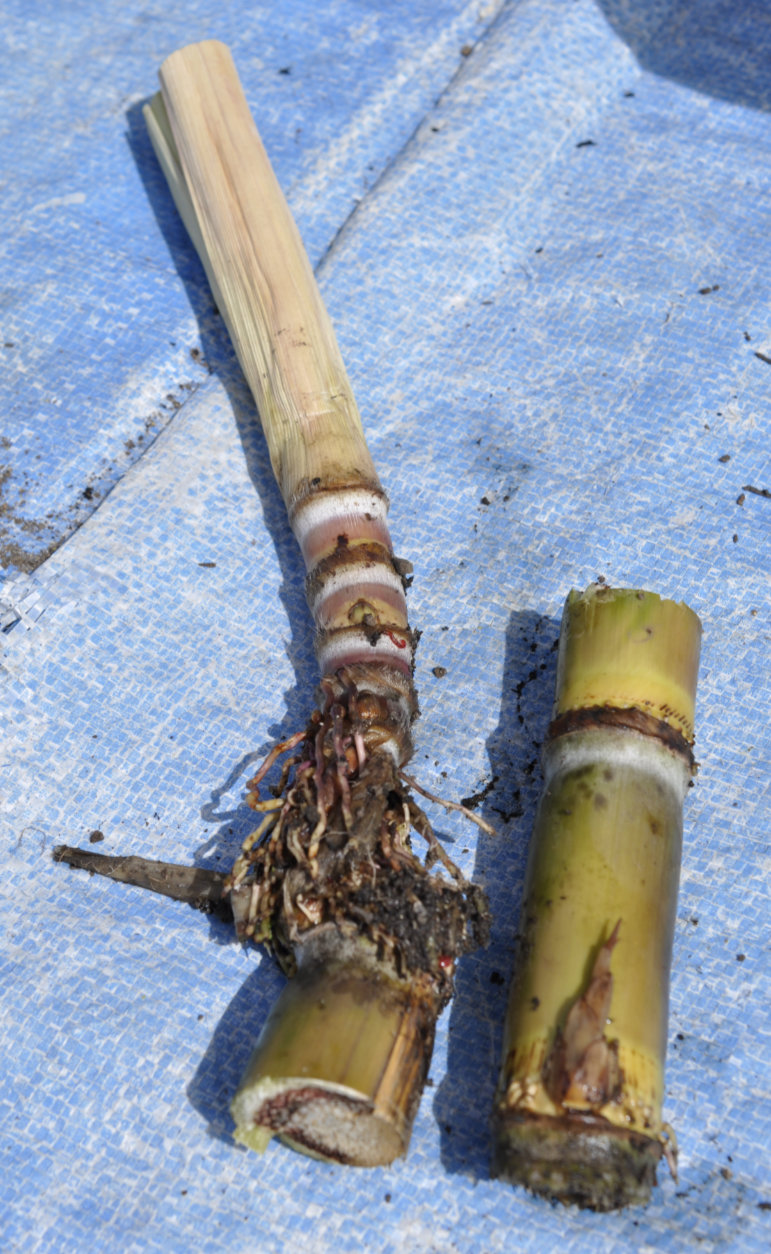
copyright © Kristi Ellinopoullos
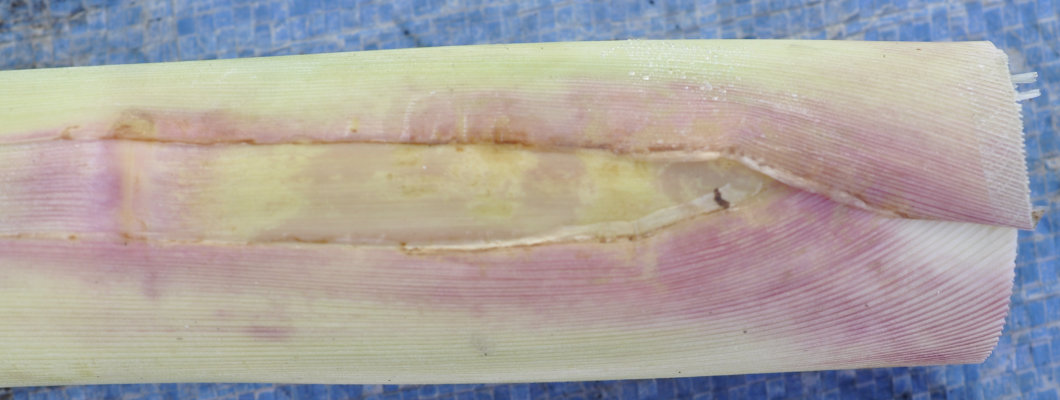
But flipping the right-hand piece to position the freshly-cut ends together was far more interesting:
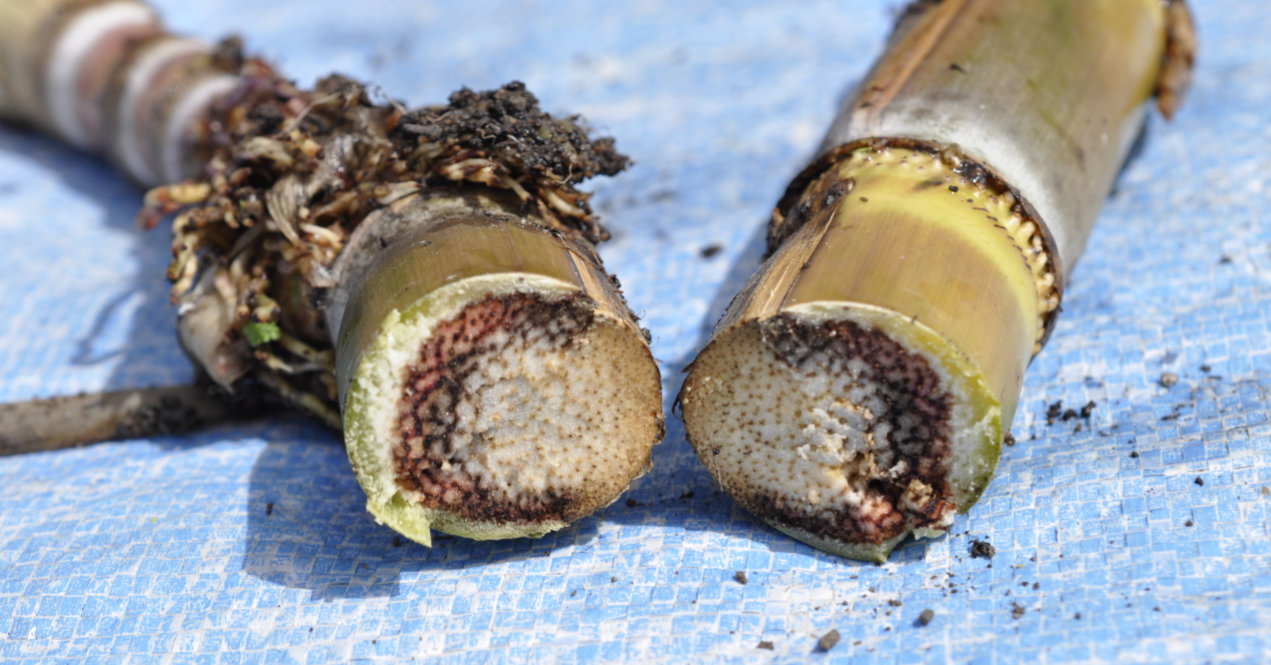
copyright © Kristi Ellinopoullos
What is that pink growth?! I have no idea — and I cannot stress that enough — but I will go out on a limb and suggest that it may be Methylobacterium spp. or Methylorubrum spp., otherwise known as the pink pigmented facultative methylotrophs (PPFMs). PPFMs are bacteria which are often found in the phyllosphere (phyllo as in leaves), or the above-ground part of the plant, The phyllosphere is the opposite to the rhizosphere, which is the root area of a plant (rhizo means roots).
Breaking down the microbial terminology:
pink pigmented — caused by carotenoid pigments (a class of red, yellow and orange pigments — think coloured vegetables and autumn leaves) in the bacterial cell and believed to protect against UV;
facultative methylotrophs — optionally methylotrophic;
methylotrophic — literally ‘eats the methyl group (-CH3)’: here this really means that PPFMs can metabolise single-carbon molecules such as methanol (CH3OH), formaldehyde (CH2O), and methylamine (CH3NH2) for energy.
The PPFMs are known to form symbioses with sugarcane and many other plants. Methanol is produced by plants, a food source for PPFMs. PPFMs are able to fix nitrogen and produce growth hormones, which benefit their plant hosts.
I have never seen this growth in freshly-cut, healthy growing cane, only in dead or compromised parts from previous cuts, or in older dying canes, or in canes left on the ground for weeks.
I posit that they never are in healthy intact canes. They are facultative methylotrophs, meaning they can metabolise other foodstuffs if available. Thus I suggest that if they were in healthy intact canes, that they would present as that same pink mass throughout a growing cane, availing themselves of nutritious cane contents, and render it inedible. And I have never seen this, only in not-so-healthy or otherwise compromised canes.
However, the leaves around those canes are always tinged with pink dots and streaks all over. You may even see some of this in the above photos.
A cut cane is going to be a very opportunistic source of sugars and other nutrients for these little guys, with the leaves a vector of sorts, into that cane. Once in the presence of rich and energy-dense sucrose their numbers cannot help but explode into a visible pink mass, much like otherwise harmless skin bacteria entering a wound can feed on the internal tissue and grow to such numbers as to cause an infection.

Related Products

Leave a Comment