





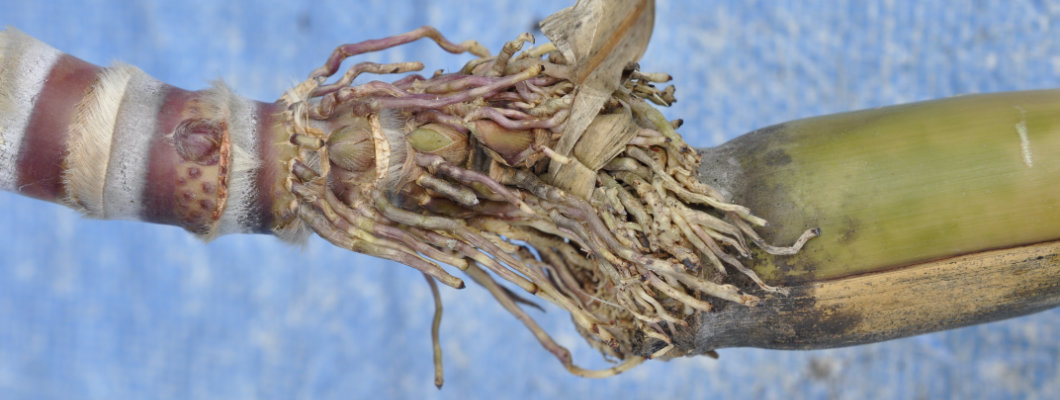
Title image above is copyright © Kristi Ellinopoullos
First published 15th March 2026
Updated on 20th March 2026
I cut a roughly 2 m cane of Cultivar 1 that other day and was absolutely transfixed by its top piece:
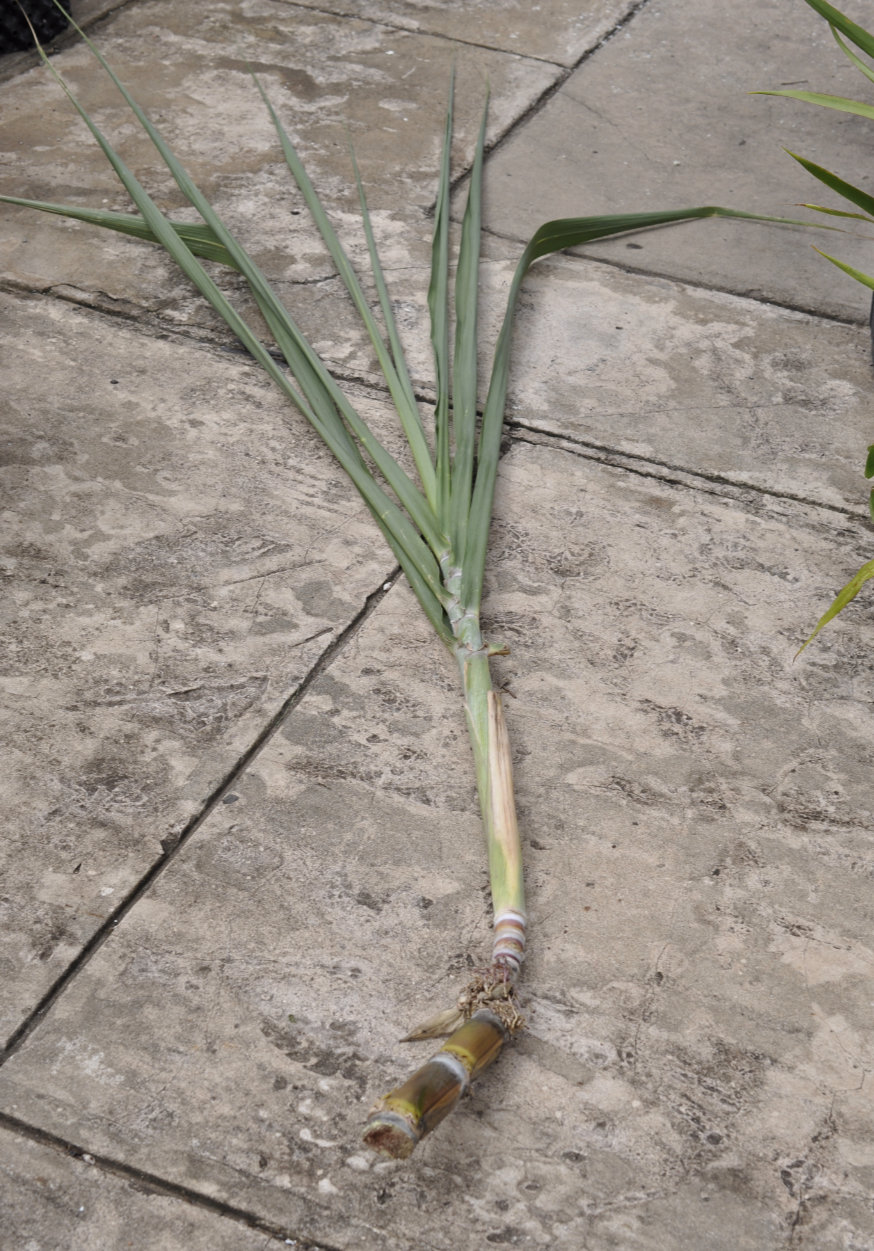
copyright © Kristi Ellinopoullos
Zooming in:
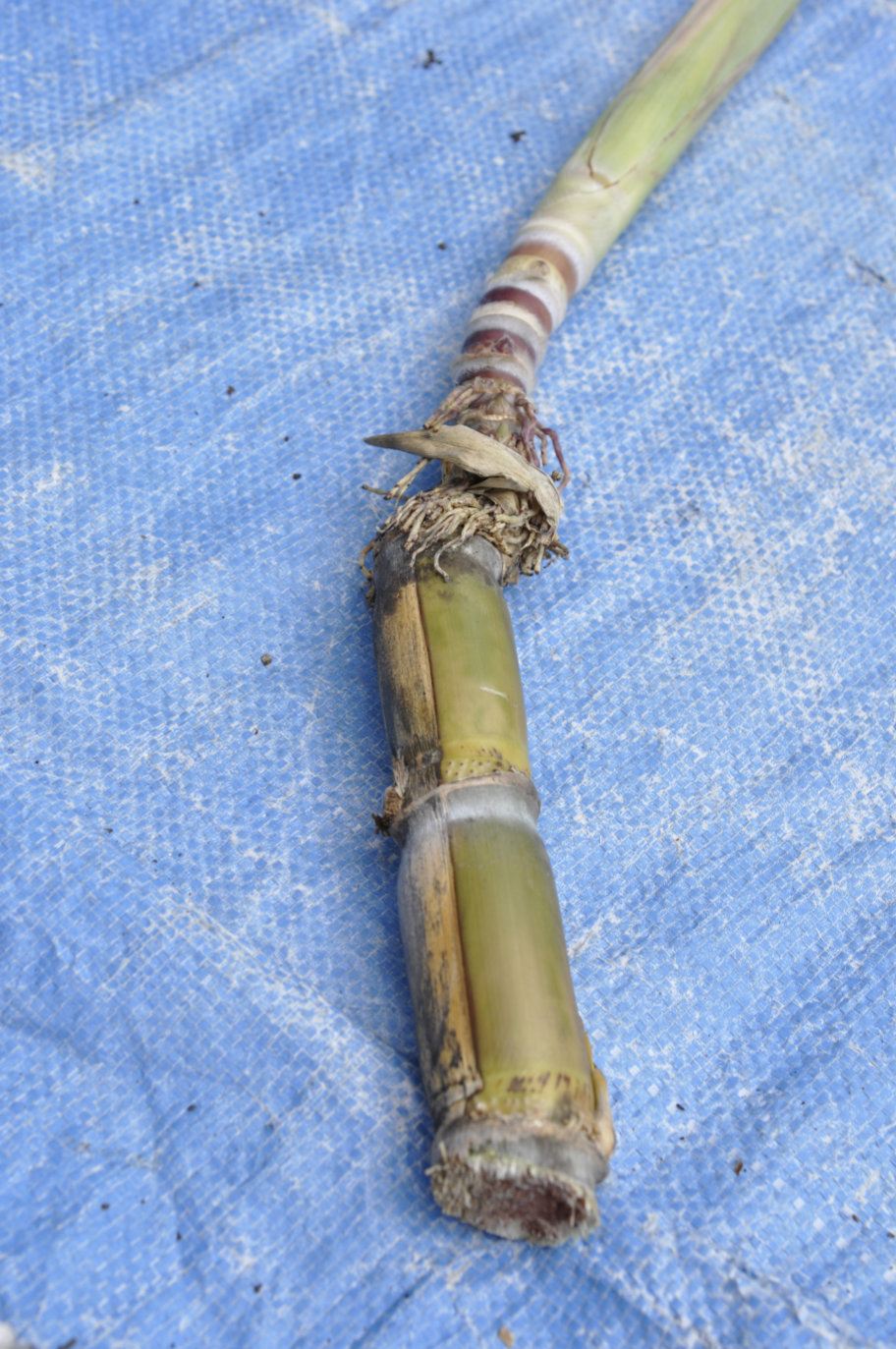
copyright © Kristi Ellinopoullos
Not too palatable here:
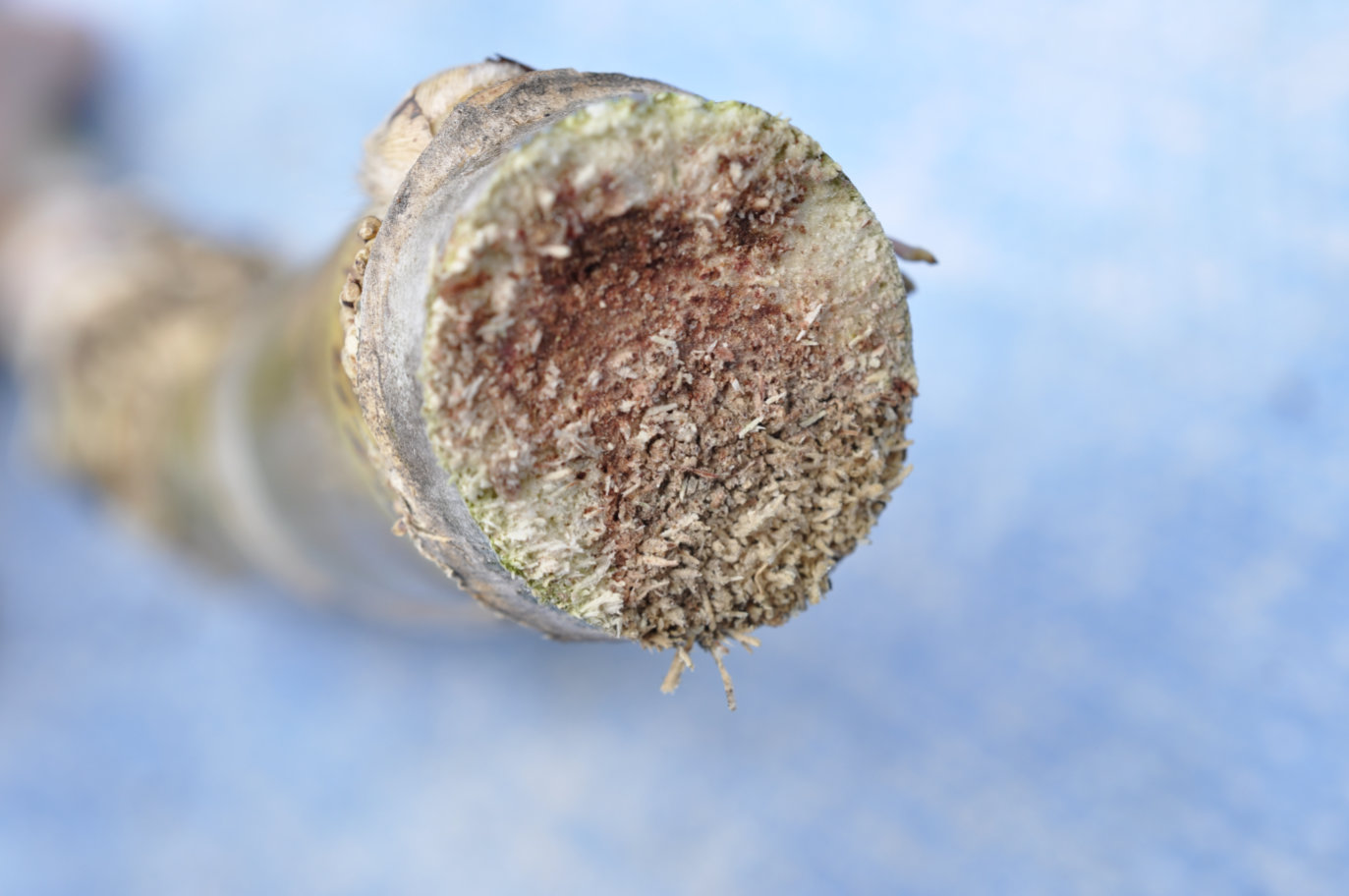
copyright © Kristi Ellinopoullos
Close-ups of different views in rotation:
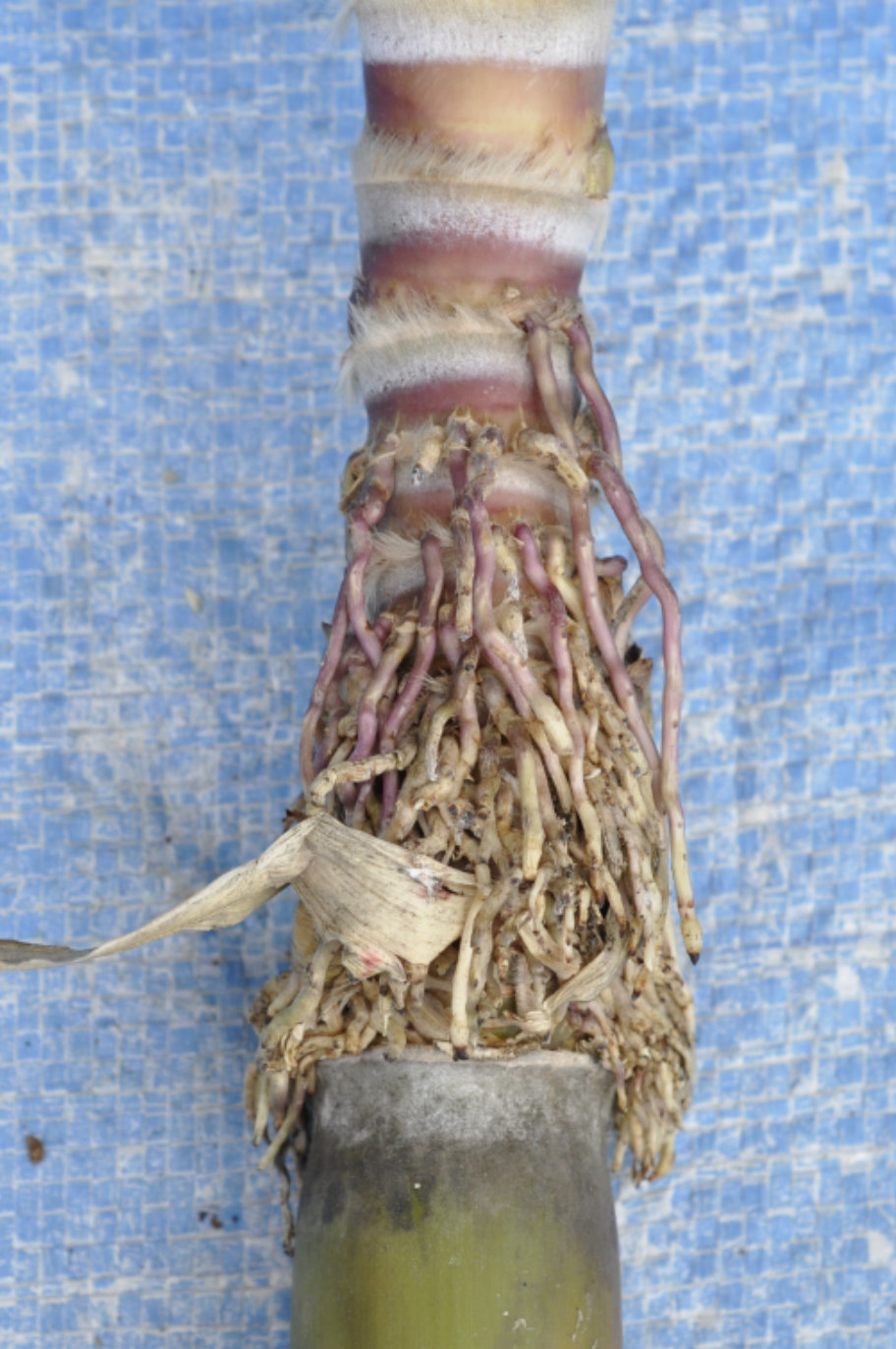
copyright © Kristi Ellinopoullos
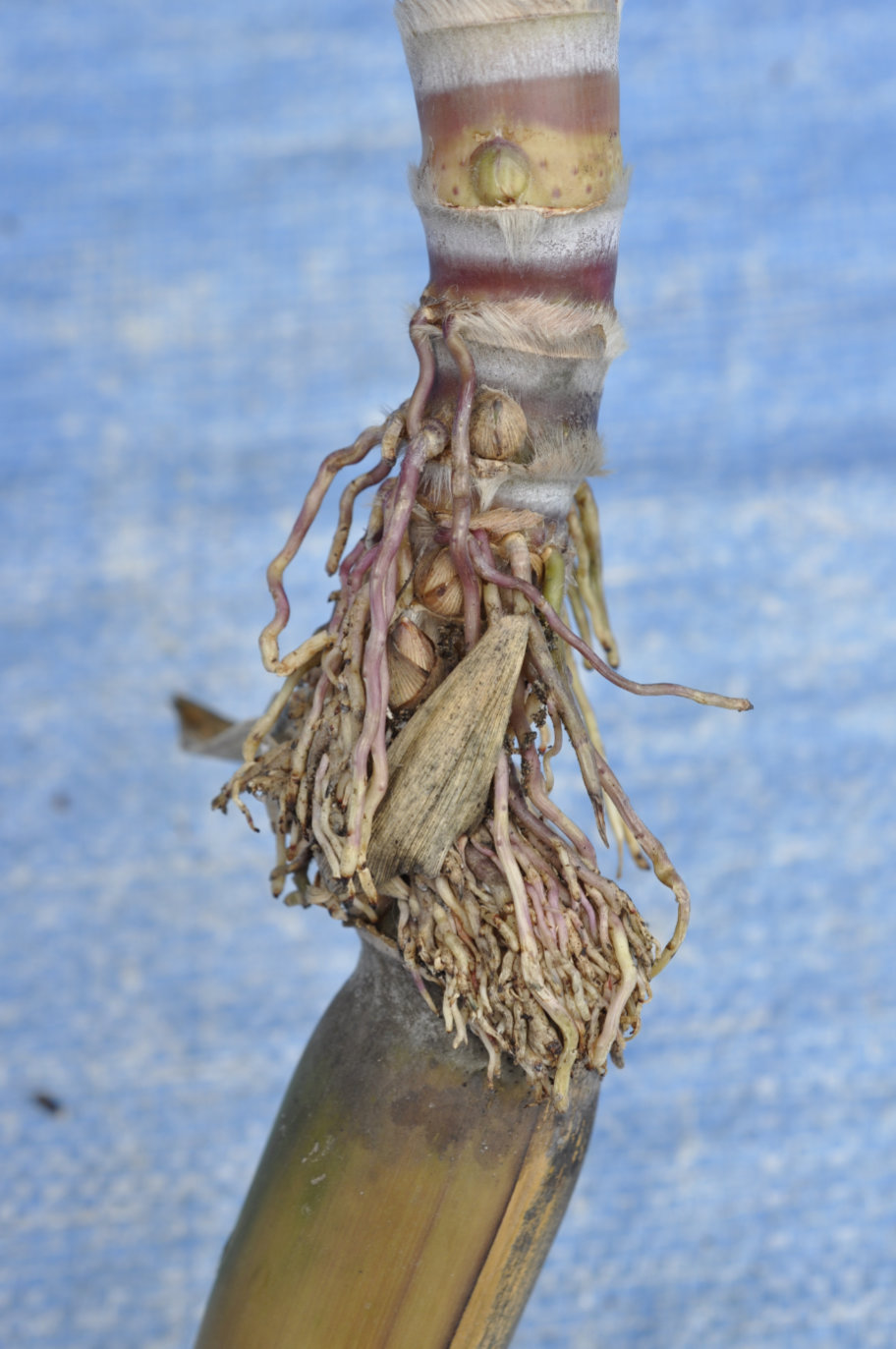
copyright © Kristi Ellinopoullos
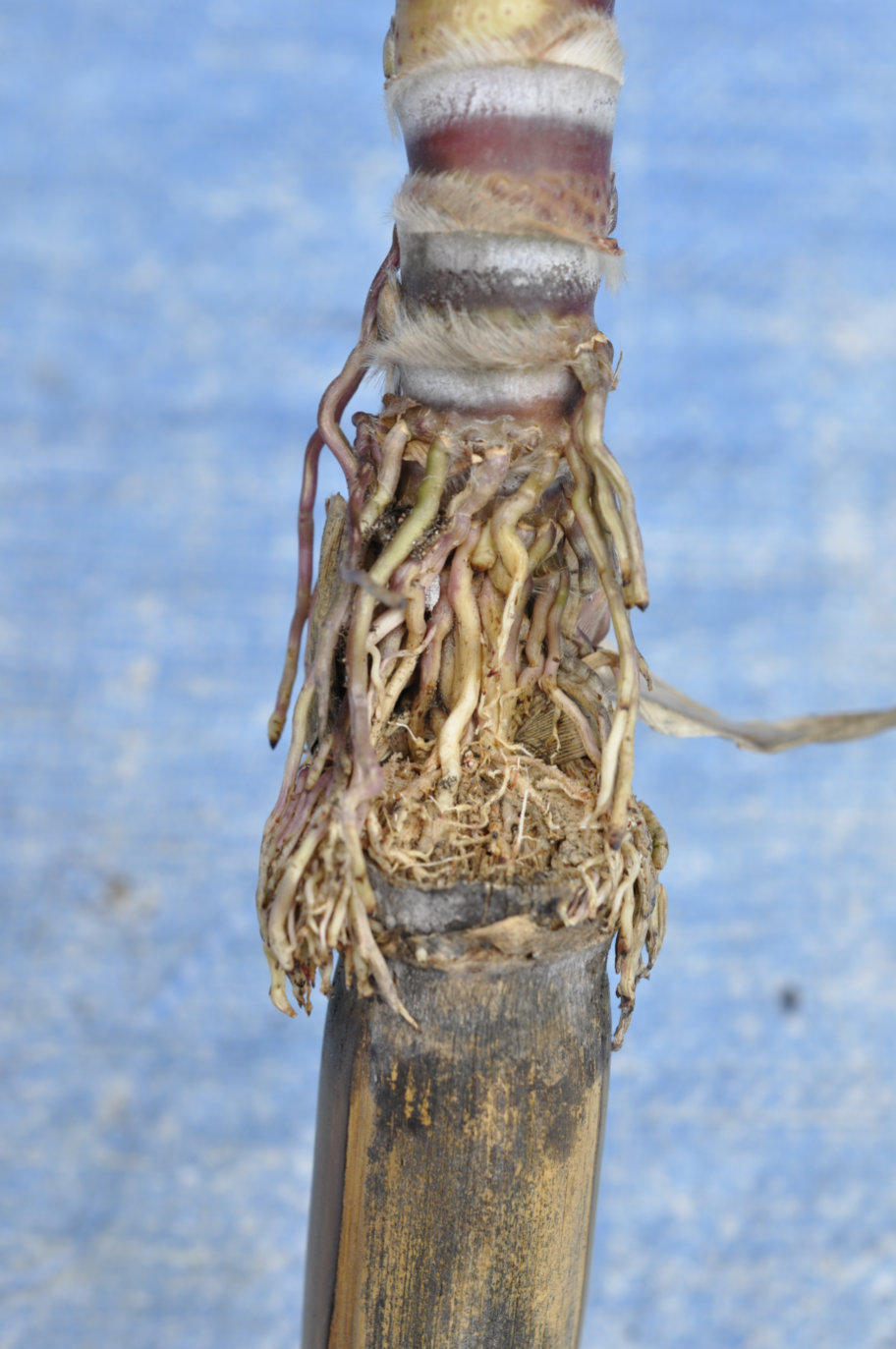
copyright © Kristi Ellinopoullos
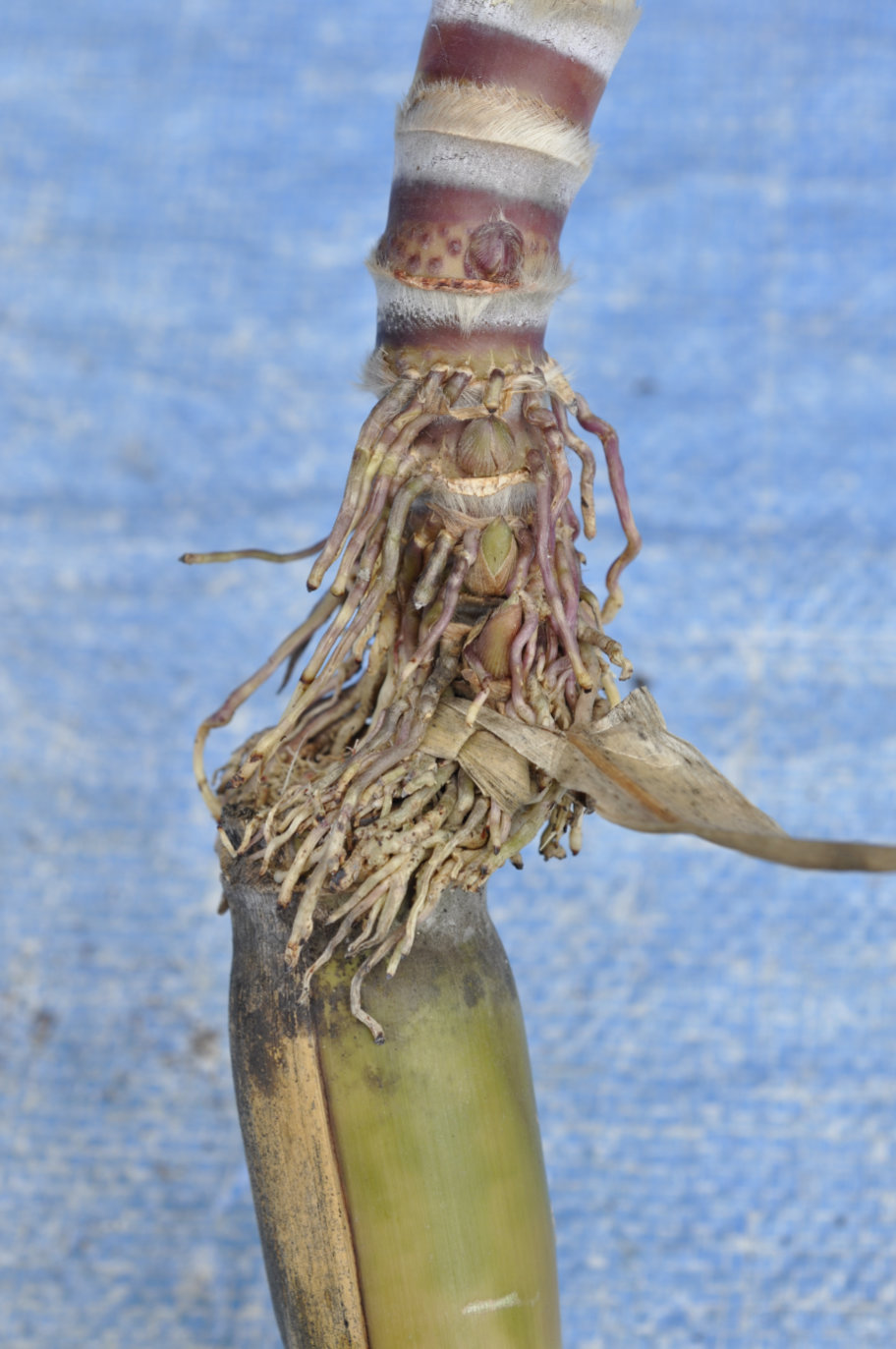
copyright © Kristi Ellinopoullos
It’s an aerial shooting, rooting segment that even sent roots into itself:
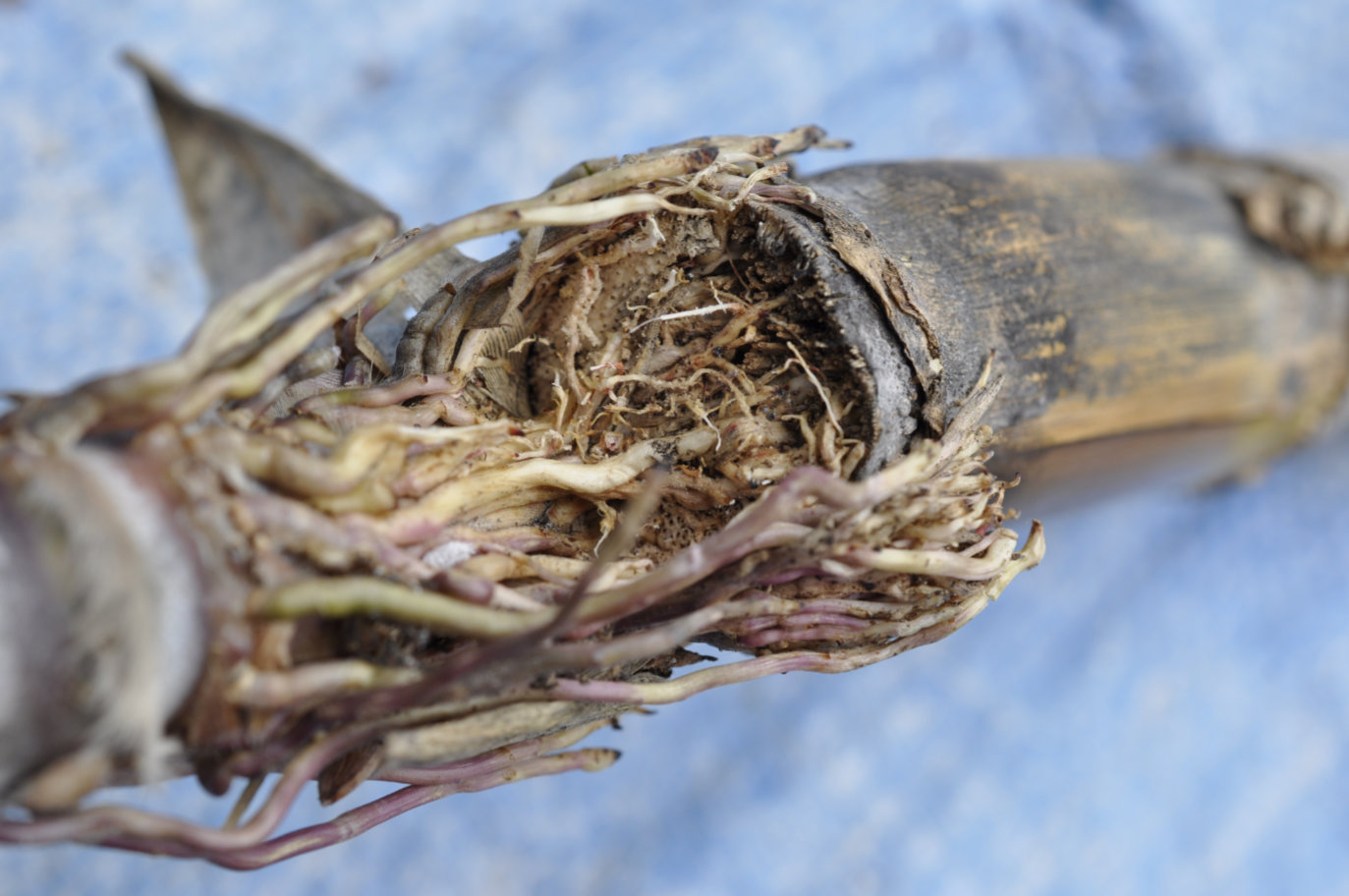
copyright © Kristi Ellinopoullos
So how did this come about?! This is best explained with still more photos — but of different canes to help piece everything together!
It all began one day when I first cut that stem however long ago, just above the green part of the lower stem in the photos above, where it’s now somewhat grey. That cut subsequently dried up and turned grey, much like in this photo of a different cut stem:
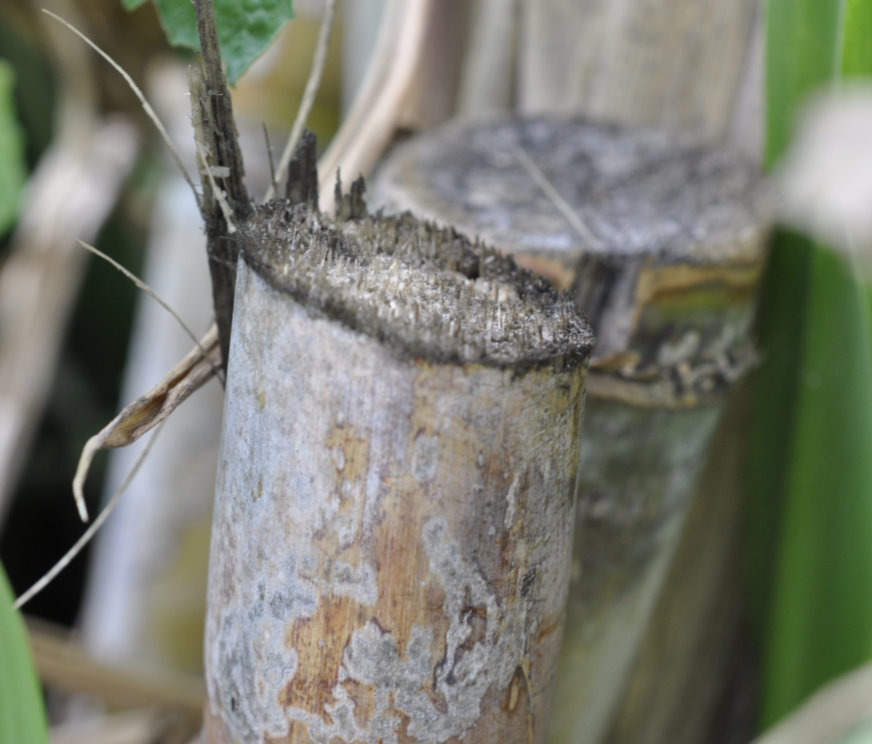
copyright © Kristi Ellinopoullos
The stem in the photo above was cut about middle of an internode. Look closely at any of the photos of the stem subject of this post, and you’ll see that that piece had been cut just above a node.
For those unfamiliar with this, the nodes in sugarcane are much like those of bamboo: thick rings between each segment. Each of those segments between the nodes is botanically called the internode. The node of any plant is where the buds are found and where leaves and branches attach to a stem (leaves and branches arise from the buds).
(The photo below is from this earlier post):
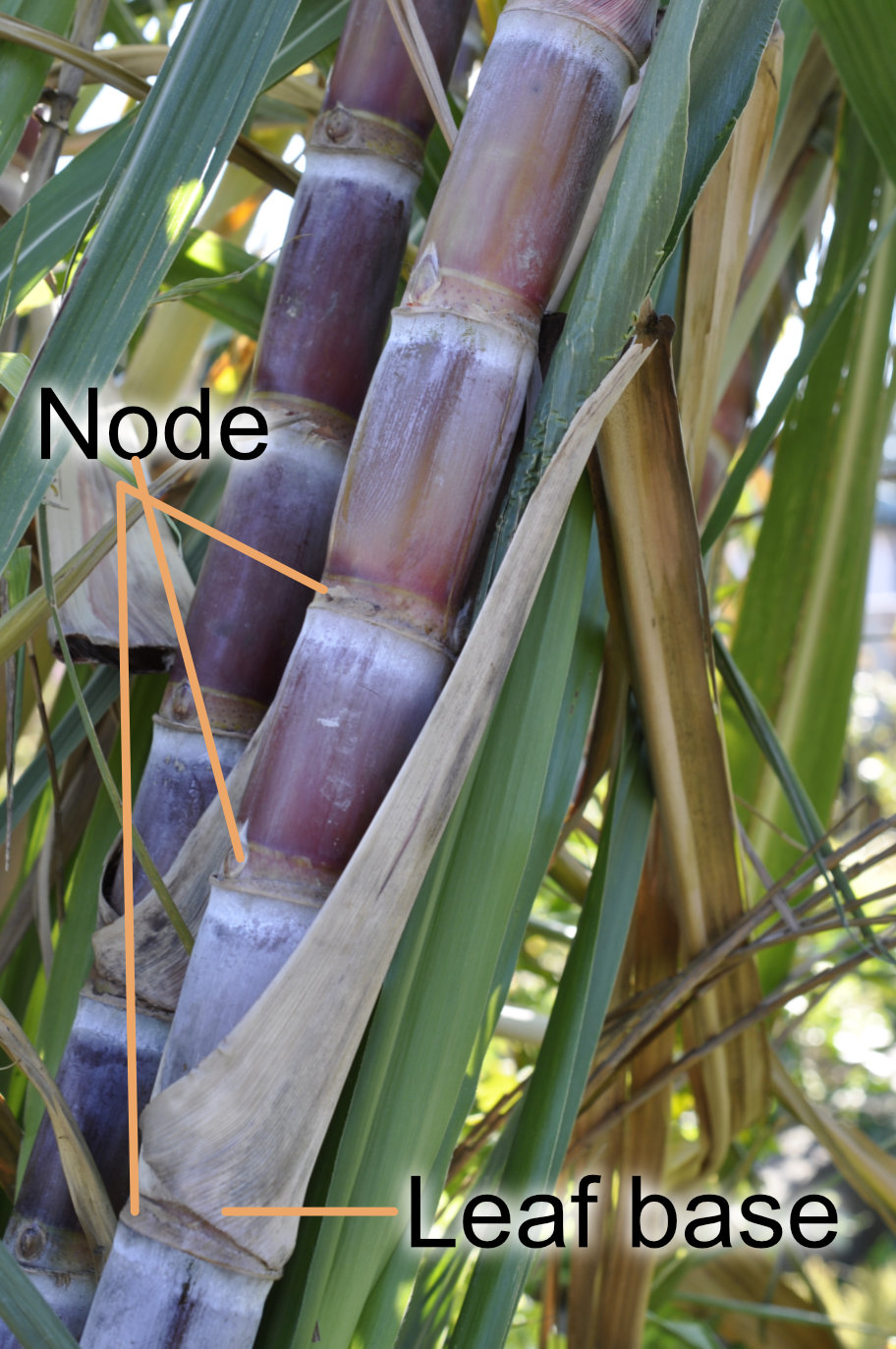
copyright © Kristi Ellinopoullos
This original cut just above a node has made all the difference. For that node was still being supplied with nutrients and hormones, and both the secondary shoot bud and the primordial root buds left dormancy to, well, shoot and root.
(The photo below is from this earlier post):
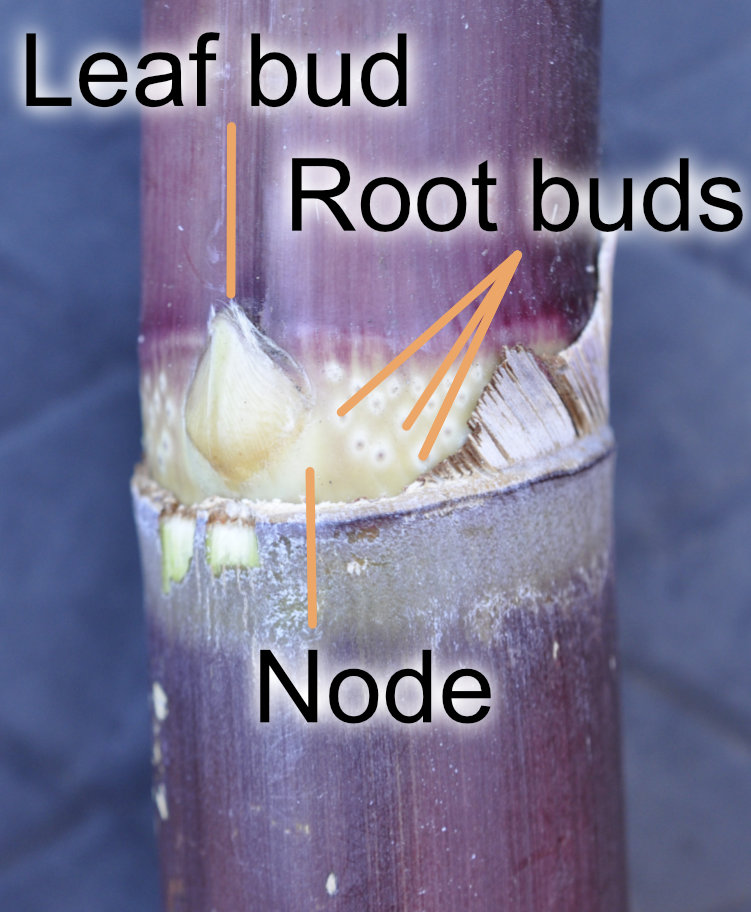
copyright © Kristi Ellinopoullos
The two labelled photos above are of a mahogany-red sugarcane I call Cultivar 2, simply because it was the second one I acquired.
The subject of this post, a more brown-green variety, is what I call Cultivar 1, and this one has far, far more propensity to put out secondary shoots than Cultivar 2. It is also quicker to root when propagating, and will even send out roots along an uncut cane. It didn’t take long to find this example on an intact cane to include in this post:
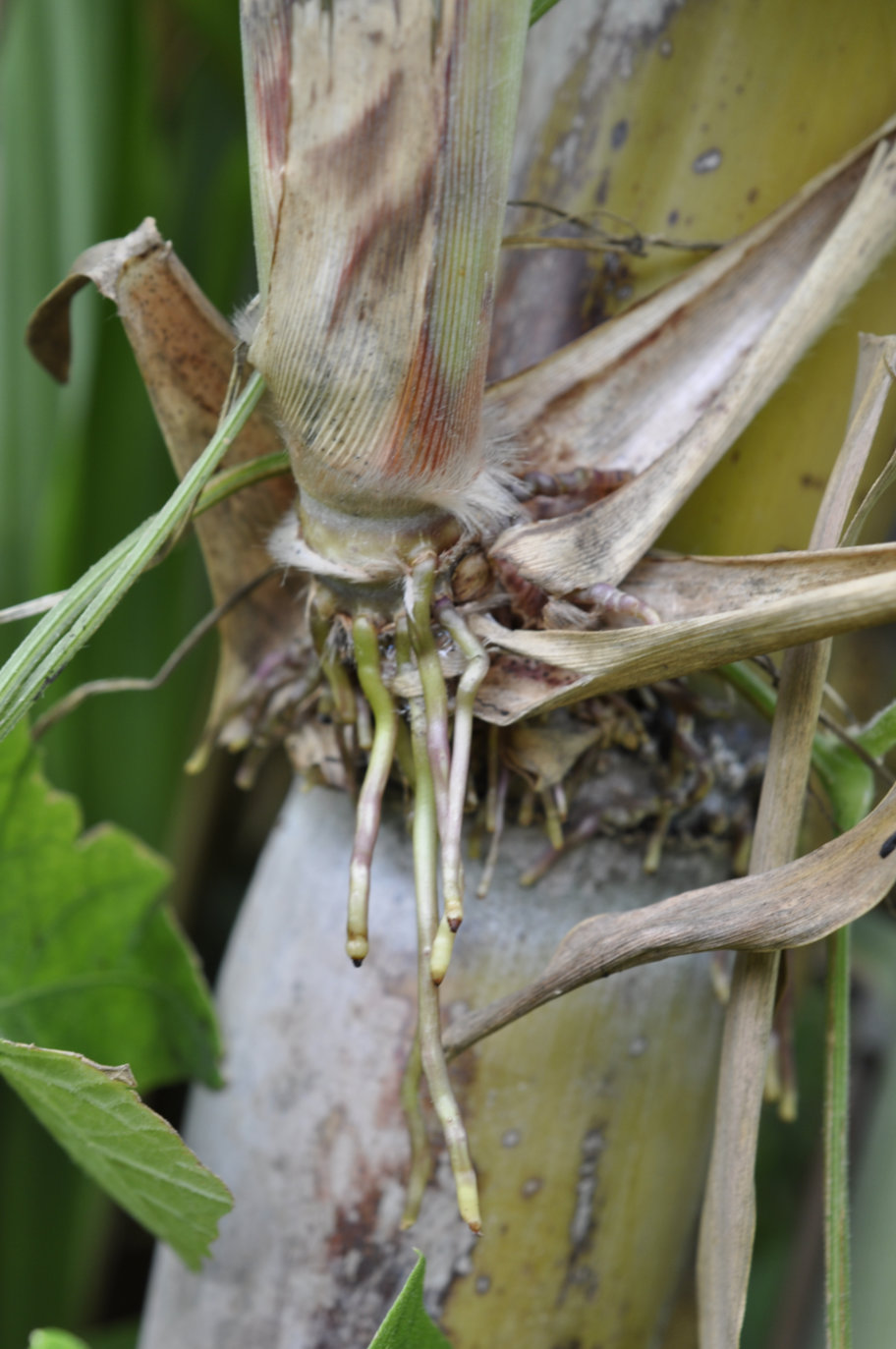
copyright © Kristi Ellinopoullos
Let’s step back a bit — here’s another cane, with just a shoot so far. But those root primordia are just bursting to get in on the action too!
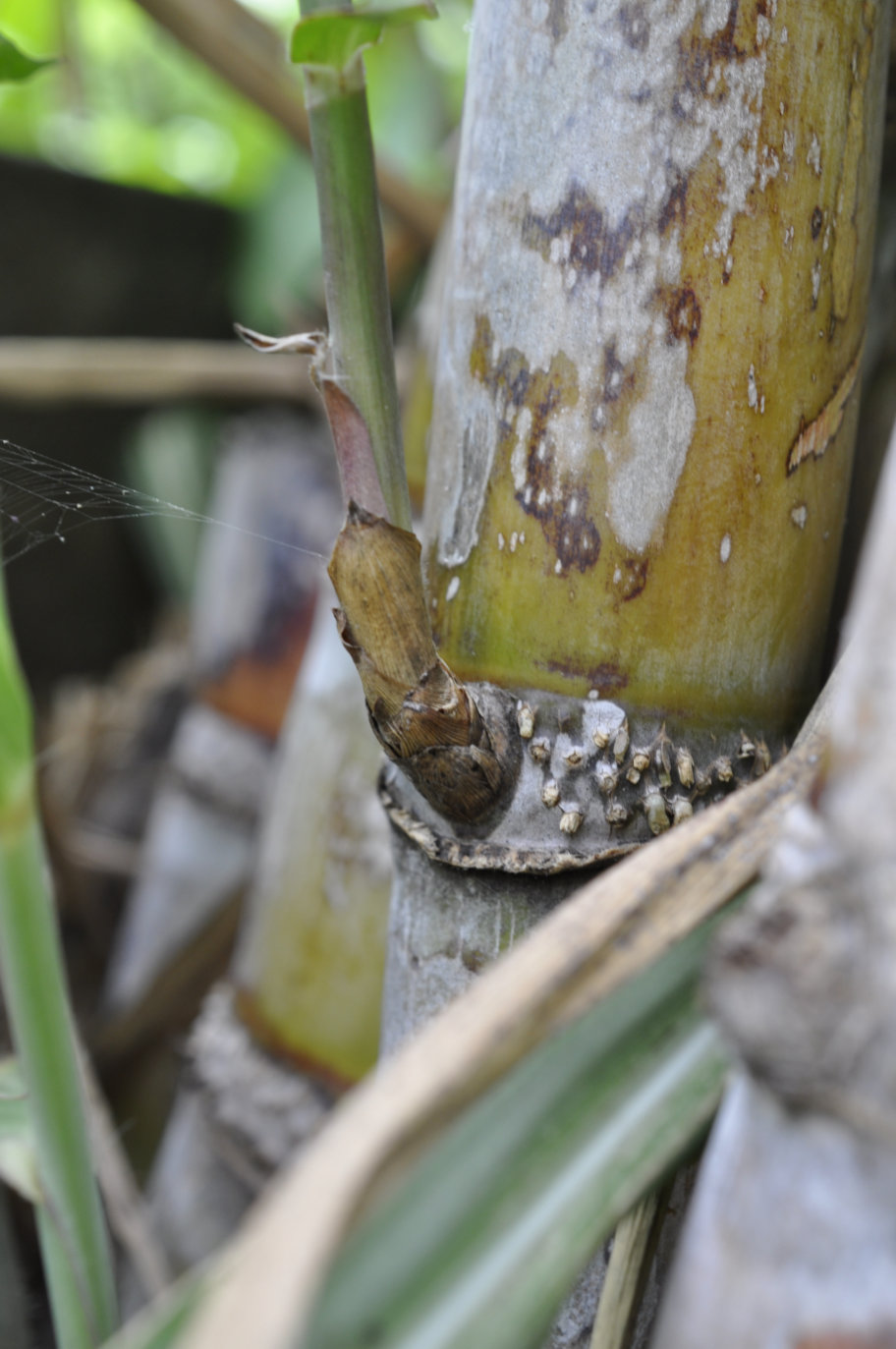
copyright © Kristi Ellinopoullos
Here’s yet another cane, but this time cut a bit above the node like the subject of this post. It too has a secondary shoot and some roots are just beginning to form:. But notice how the cut end is grey and not so lively looking?
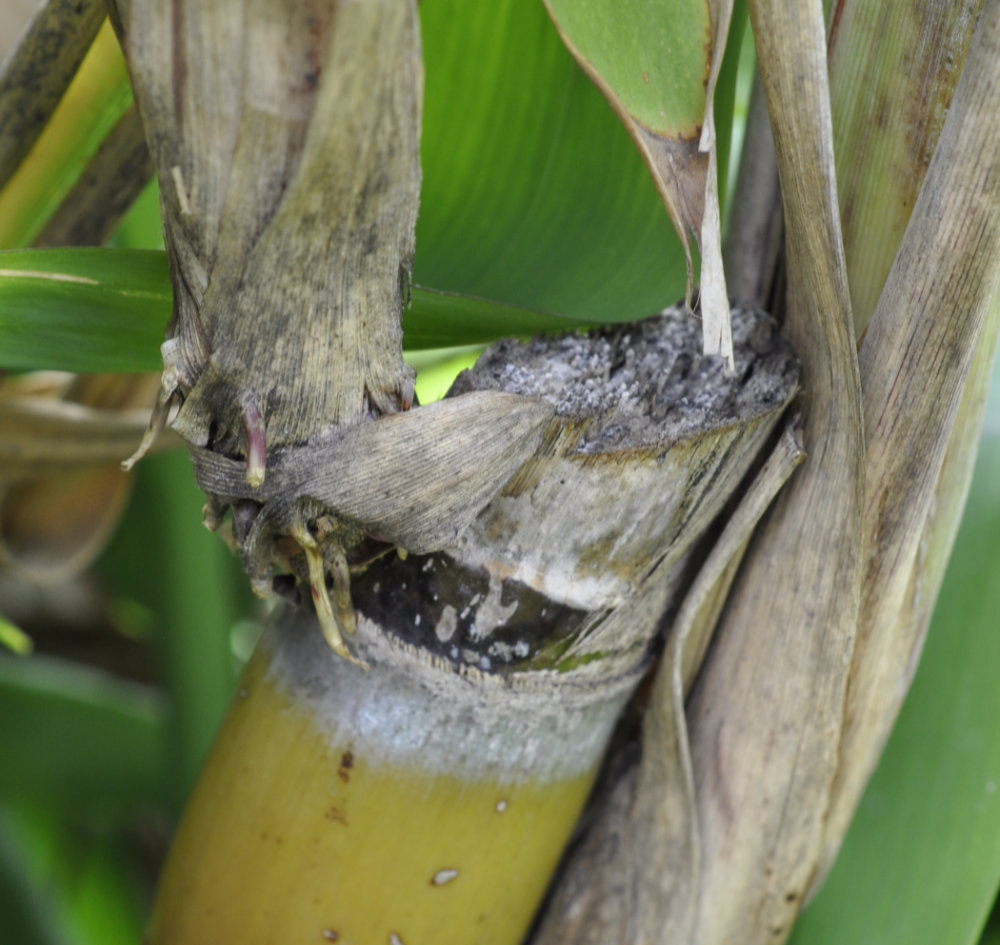
copyright © Kristi Ellinopoullos
That bit will eventually rot down. Let’s compare that photo above with one from a similar angle of our original post subject photo:
copyright © Kristi Ellinopoullos
Hopefully the photos of the four other stems will help tell the story of how this one came to be at all.
It all began when our stem subject was first cut just above the node. A secondary shoot probably grew first, followed by roots.
The cut was so close to the node, that the node turned grey and rotted out.
But before and during this, the shoot kept growing and developed into a proper cane with nodes and internodes, albeit somewhat compressed.
The growing shoot possibly suppressed its secondary buds from shooting as well, but the root primordia on the bottom-most node probably broke dormancy so as to produce roots for the developing cane.
Those roots possibly tapped the sugars and nutrients of the original cane, and this may have triggered still more primordia higher up to break dormancy to either feed the cane further, or to provide structural support, or both.
Update: 20th March 2026
Back on the 16th March, after writing this post, I cut that stem into two pieces to pot up. Here I’ve laid the two pieces side by side such that the bottom half is in the same orientation as the top.
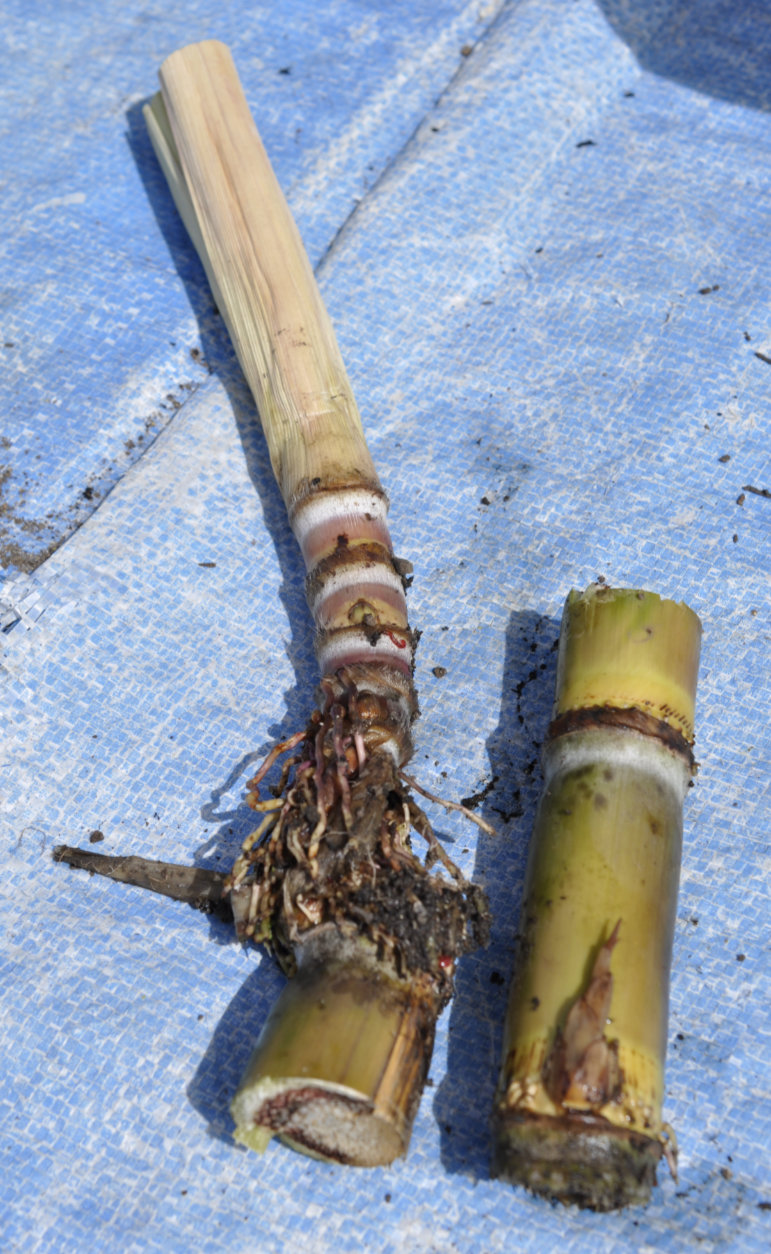
copyright © Kristi Ellinopoullos
But flipping the right-hand piece to position the freshly-cut ends together was far more interesting:
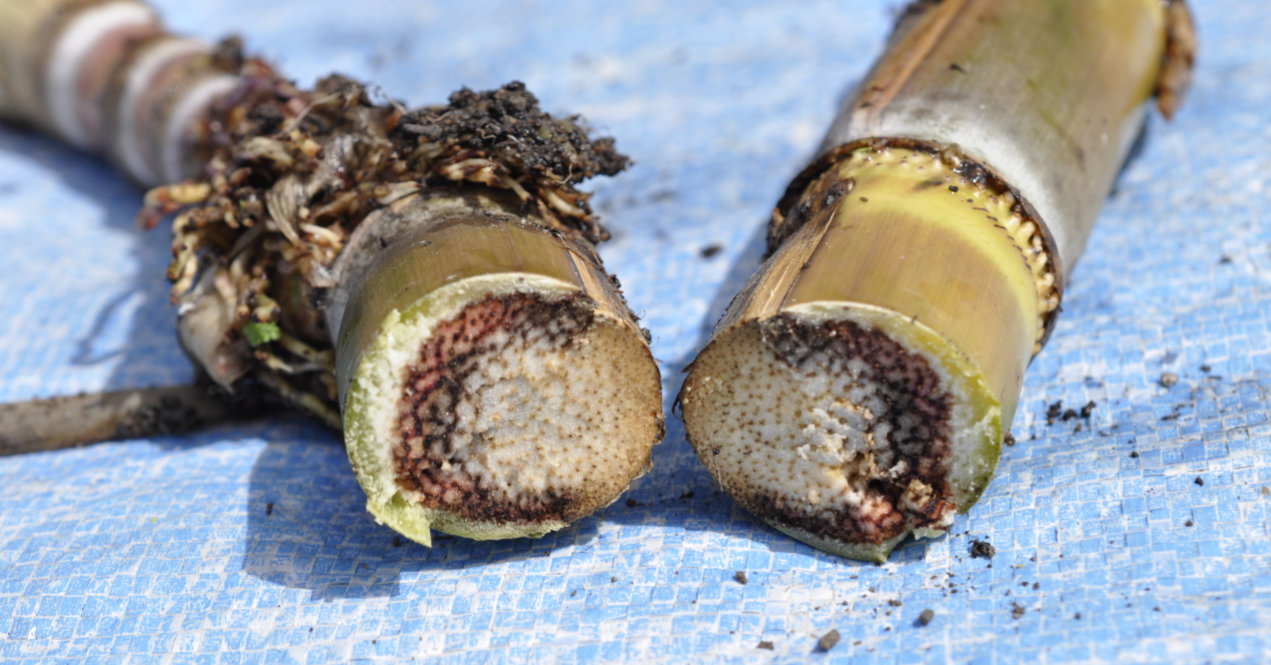
copyright © Kristi Ellinopoullos
What is that pink growth?! I have no idea — and I cannot stress that enough — but I will go out on a limb and suggest that it may be Methylobacterium spp. or Methylorubrum spp., otherwise known as the pink pigmented facultative methylotrophs (PPFMs). PPFMs are bacteria which are often found in the phyllosphere (phyllo as in leaves), or the above-ground part of the plant, The phyllosphere is the opposite to the rhizosphere, which is the root area of a plant (rhizo means roots).
Breaking down the microbial terminology:
pink pigmented — caused by carotenoid pigments (a class of red, yellow and orange pigments — think coloured vegetables and autumn leaves) in the bacterial cell and believed to protect against UV;
facultative methylotrophs — optionally methylotrophic;
methylotrophic — literally ‘eats the methyl group (-CH3)’: here this really means that PPFMs can metabolise single-carbon molecules such as methanol (CH3OH), formaldehyde (CH2O), and methylamine (CH3NH2) for energy.
The PPFMs are known to form symbioses with sugarcane and many other plants. Methanol is produced by plants, a food source for PPFMs. PPFMs are able to fix nitrogen and produce growth hormones, which benefit their plant hosts.
I have never seen this growth in freshly-cut, healthy growing cane, only in dead or compromised parts from previous cuts, or in older dying canes, or in canes left on the ground for weeks.
I posit that they never are in healthy intact canes. They are facultative methylotrophs, meaning they can metabolise other foodstuffs if available. Thus I suggest that if they were in healthy intact canes, that they would present as that same pink mass throughout a growing cane, availing themselves of nutritious cane contents, and render it inedible. And I have never seen this, only in not-so-healthy or otherwise compromised canes.
However, the leaves around those canes are always tinged with pink dots and streaks all over. You may even see some of this in the above photos.
A cut cane is going to be a very opportunistic source of sugars and other nutrients for these little guys, with the leaves a vector of sorts, into that cane. Once in the presence of rich and energy-dense sucrose their numbers cannot help but explode into a visible pink mass, much like otherwise harmless skin bacteria entering a wound can feed on the internal tissue and grow to such numbers as to cause an infection.
.
.
.
Sorry, I was heavily distracted there! Microbes are “squirrel!” for me!
Back to the real purpose of this update, the potting up of those two pieces! I thought it might make a fun and ongoing blog series to see how each piece develops hereonin.
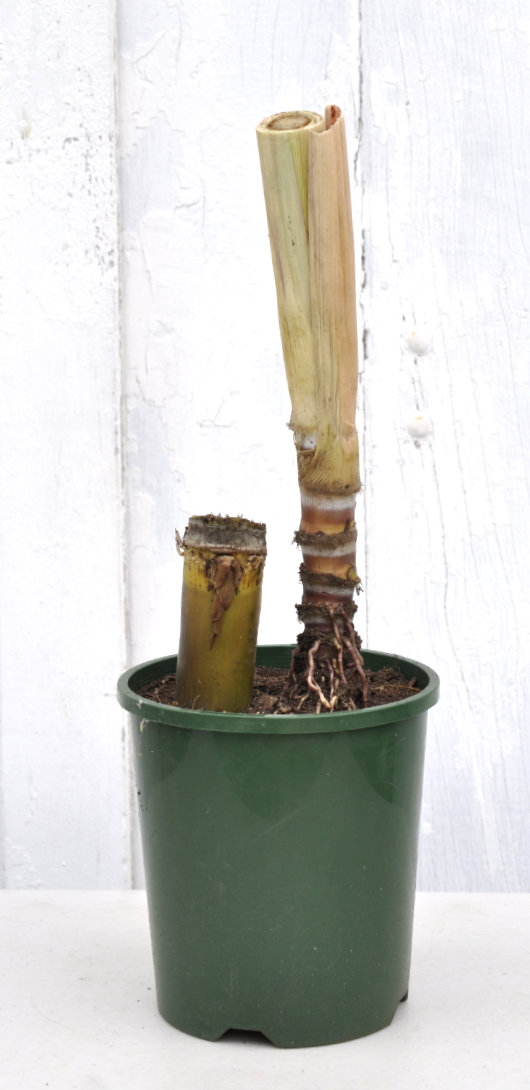
copyright © Kristi Ellinopoullos
I deliberately potted the rooted piece such that most of the roots would be above-ground, just to see what would happen.
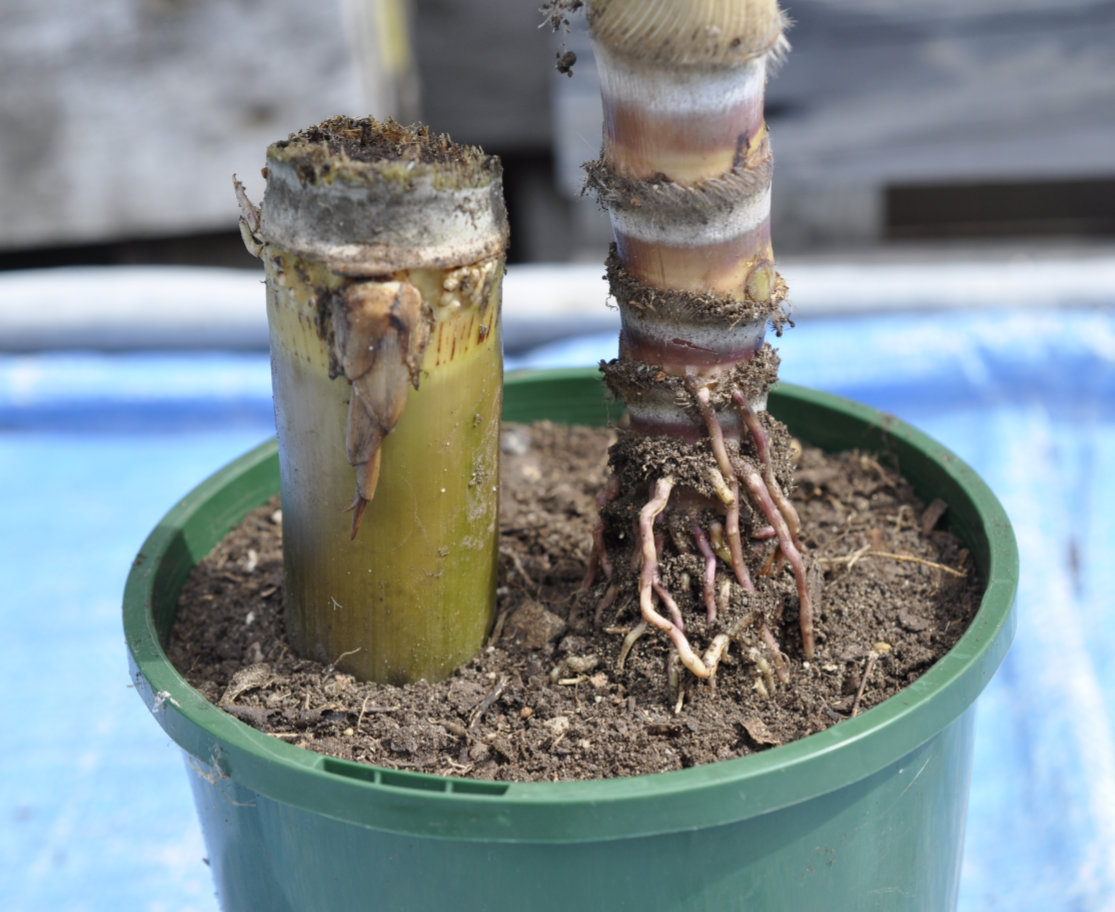
copyright © Kristi Ellinopoullos
But oh no! I can’t believe what I did with the other! I didn’t even notice until looking at this photo properly. Can you see it? The piece on the left is upside down! That is an upside down shoot facing frontwards.
I just then pulled it out, and the roots have already taken off, in just four days!
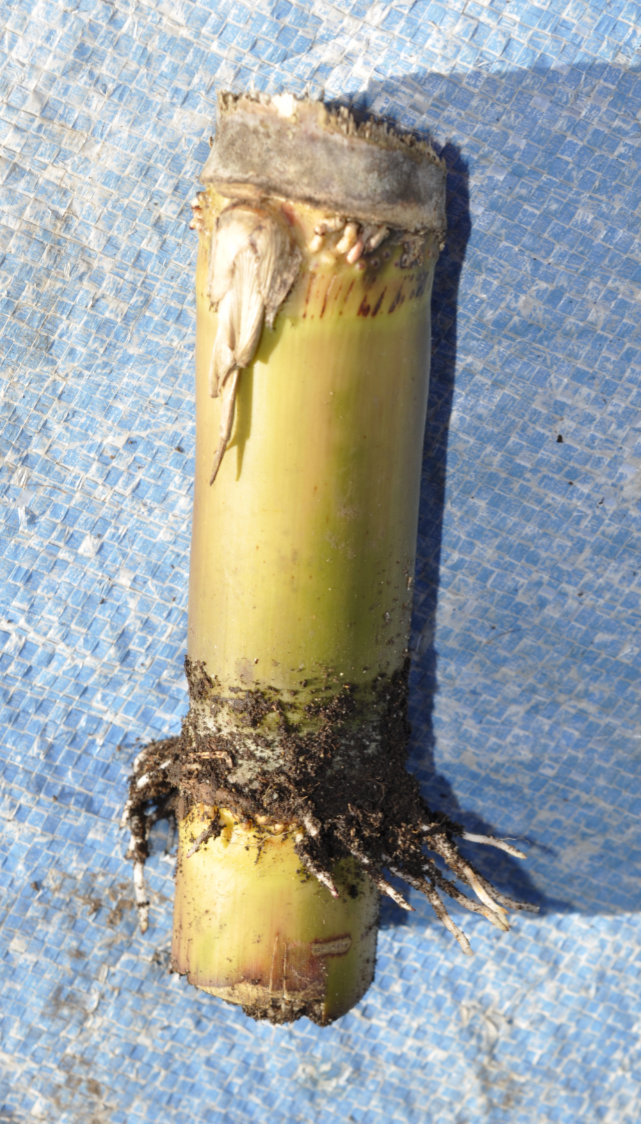
copyright © Kristi Ellinopoullos
And the root primordia are absolutely raging to go at the other ”proper” end:
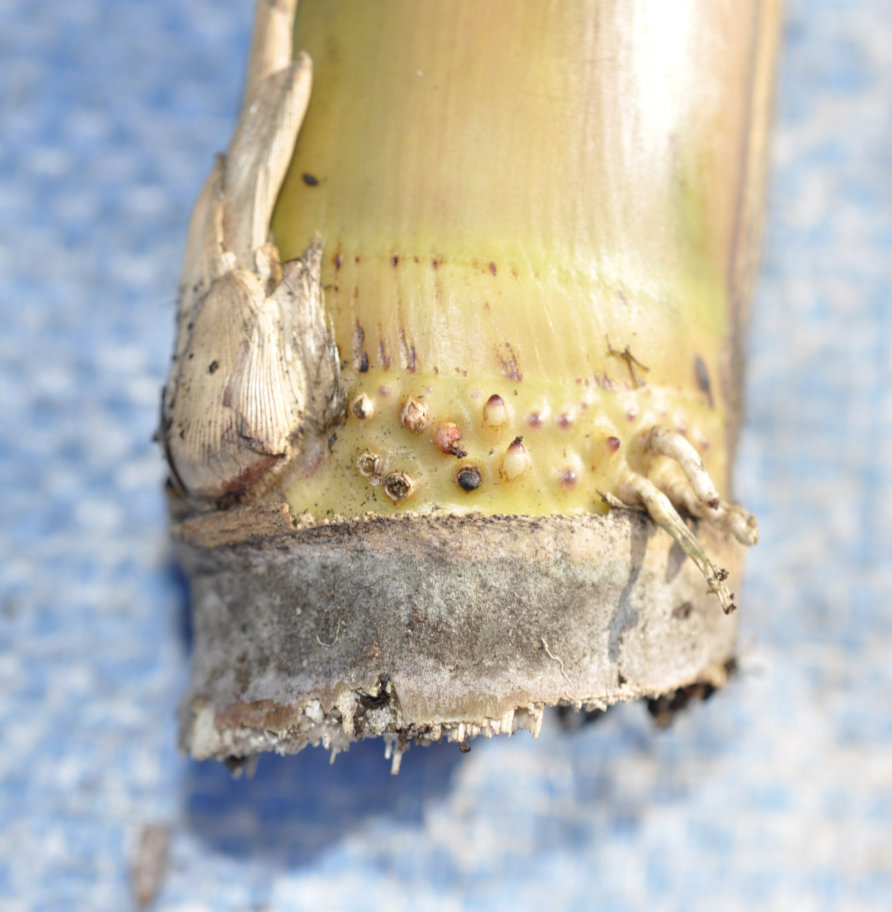
copyright © Kristi Ellinopoullos
Now right way up:
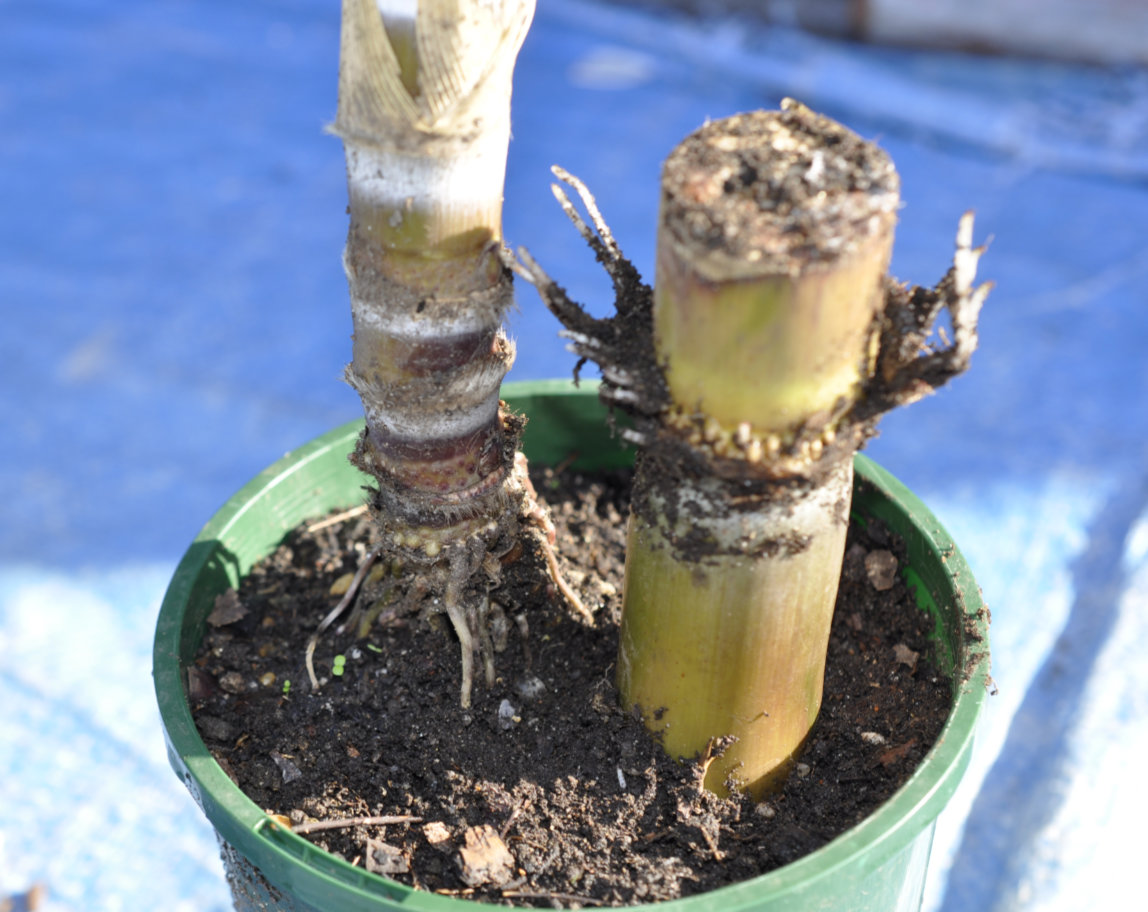
copyright © Kristi Ellinopoullos
The taller piece is about 250 mm and the shorter about 100 mm tall.
I’m somewhat glad I stuffed this up the first time, as I’m now very curious as to what those now upside-down roots will or won’t do!

Related Products

Leave a Comment