


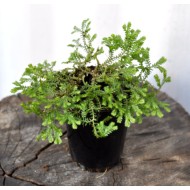
Title image above is copyright © Kristi Ellinopoullos
First published 25th February 2026
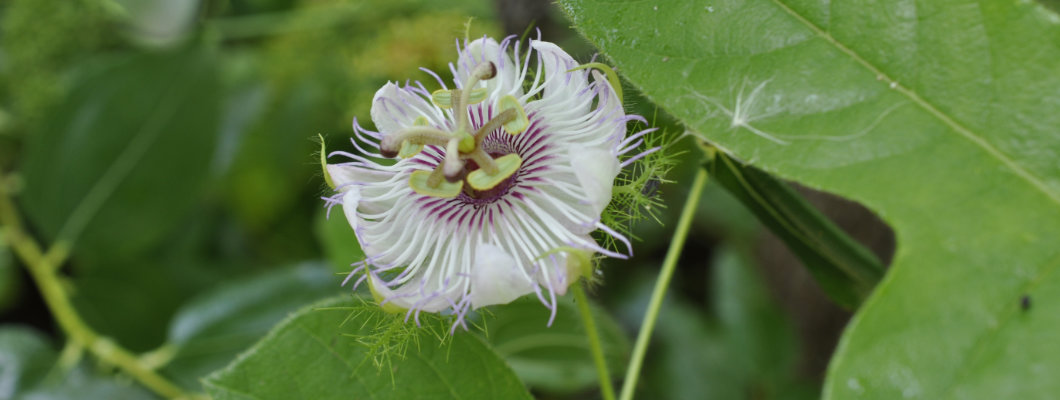
People always do a double-take whenever I mention that I have carnivorous passionfruit! Though apparently it is more accurately a protocarnivorous passionfruit. Here is the flower of the protocarnivorous passionfruit, Passiflora foetida:
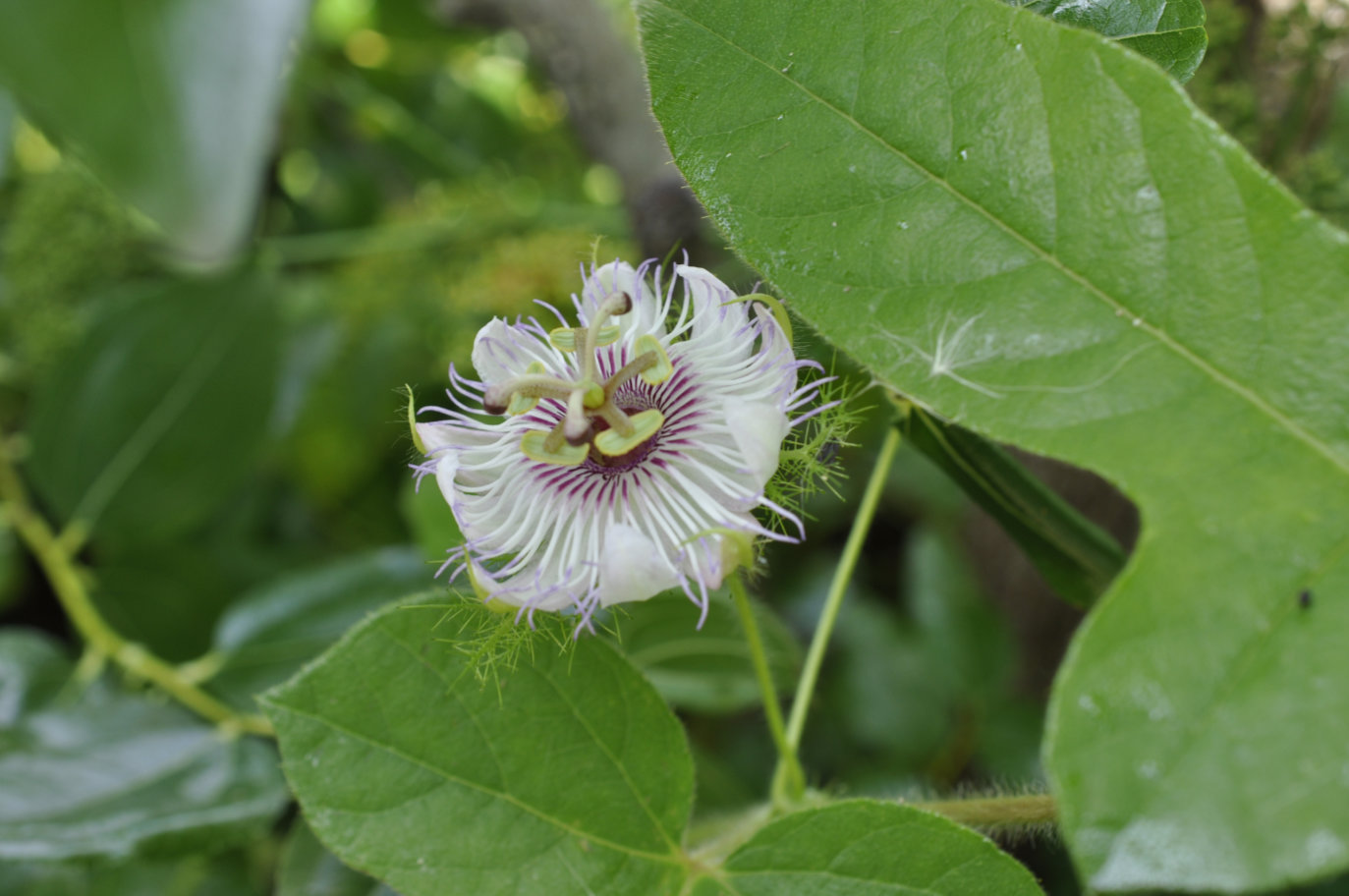
copyright © Kristi Ellinopoullos
foetida is from the Latin fētidus (‘foul’, ‘stinking’, ‘bad-smelling’), hence the common name of ‘stinking passionflower’, which is a reference to the smell of the crushed leaves some people find offensive. The leaves when crushed do have a mild odour of some description, but I don’t find it unpleasant <shrug>.
The bracts of this species is where all the action is. Bracts are specialised leaves associated with a reproductive part of a plant, and not all plants have bracts. Examples of bracts are the hard wood-like segments of a pine cone, and the brightly coloured “petals” of “flowers” of many species including Bougainvillea glabra — yes, these are really leaves surrounding the actual, smaller, much paler yellow flowers!
The bracts of this passionfruit flower are as weird-looking as the flower itself — they are the green, feathery parts surrounding a developing flower bud in the photo below, and if you look closely at roughly eight o’clock, you will see an insect caught by one!
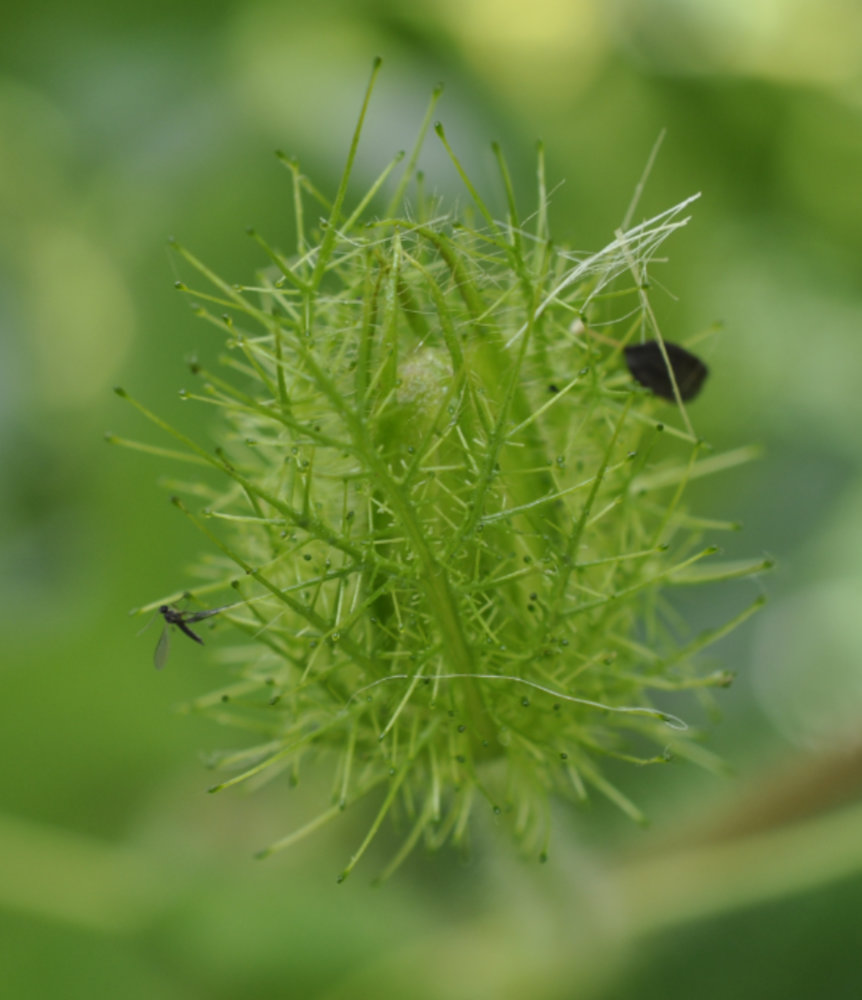
copyright © Kristi Ellinopoullos
(The larger blob at about two o’clock is not an insect but some detritus from possibly the plant itself.)
The bracts secrete a sticky substance which contains digestive enzymes, hence the ‘carnivorous’ label. But it isn’t clear if the plant gains nutrients from the insects it traps, hence the ‘protocarnivorous’ label.
Whether a simple defence mechanism to protect its flowers, or an evolutionary beginning to true carnivory, who knows, but the world is richer for having it at all!

Leave a Comment