






Title image above is copyright © Kristi Ellinopoullos
First published 9th December 2025
Here we are going to explore the botanical structure of a sugarcane stalk. These parts are common to all stems and branches regardless of species, but they are particularly distinct here in sugarcane (and the similar bamboo, both of which are grasses).
copyright © Kristi Ellinopoullos
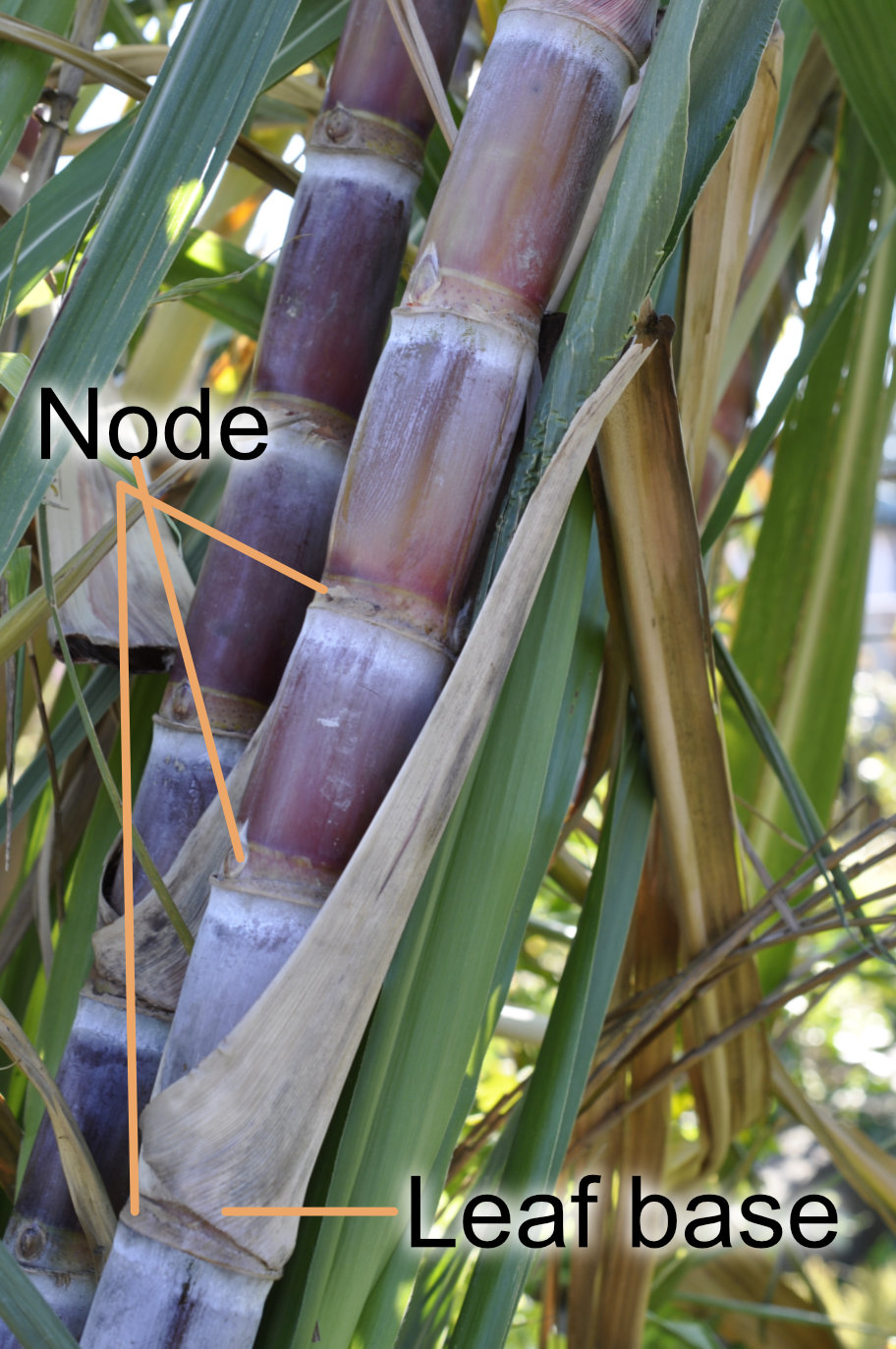
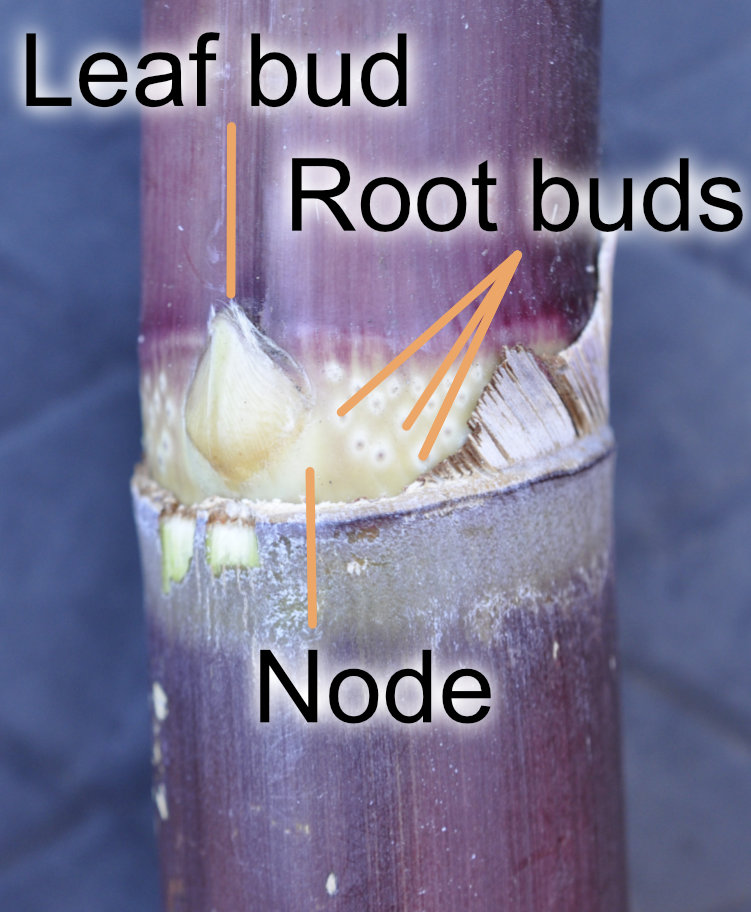
Sugarcane (like bamboo) has very distinct nodes — the thick rings between each segment. Each of those segments between the nodes is botanically called the internode. The node of any plant is where the buds are found and where leaves and branches attach to a stem (leaves and branches arise from the buds).
The base of each leaf attaches to a node, and its orientation tells us which way is up.
In the photo above you can see how the base of the leaf is attached to a node. Not visible, but further up and down that stem are other leaves attached to other nodes.
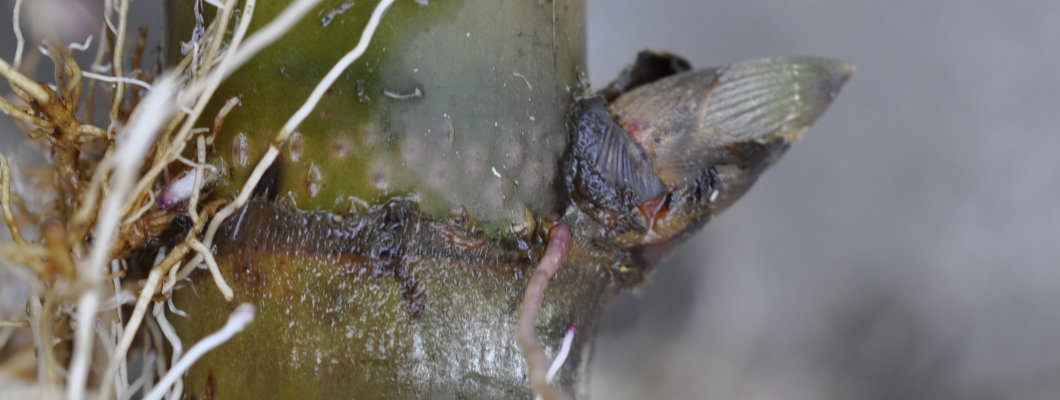
Zooming in shows the bulging secondary shoot bud of sugarcane — one per node — and the smaller dot-like primordial root buds which circumnavigate the node:
copyright © Kristi Ellinopoullos
The shoot bud is always on the same side of the protruding node disk as the leaf base, and thus it is very easy to know which way is up at all times.
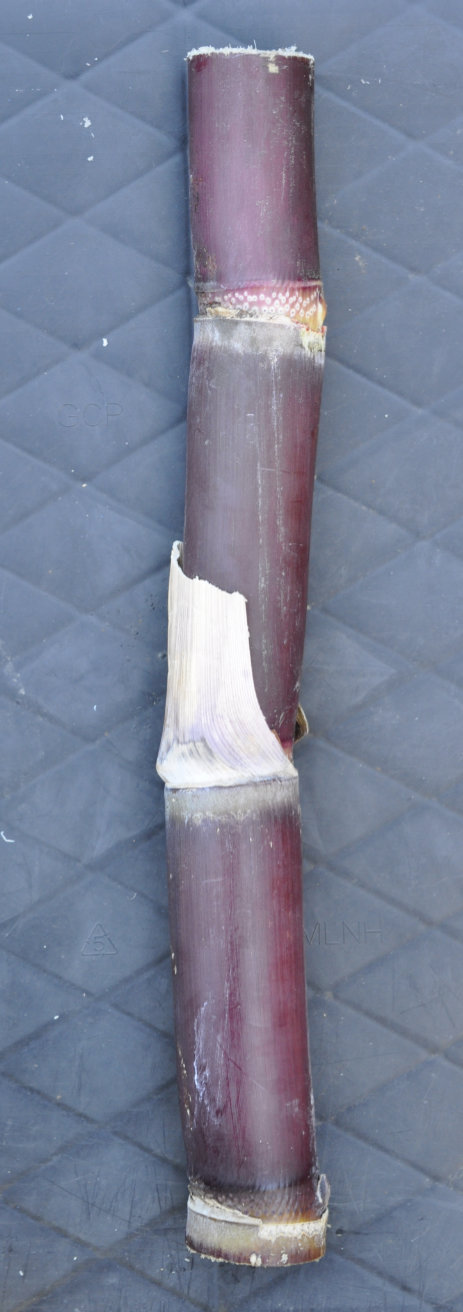
Here is a piece of sugarcane with the leaf base visibly wrapped around the stem. Note the orientation of that leaf — this way is up:
copyright © Kristi Ellinopoullos
This is important to know when propagating from a stem.
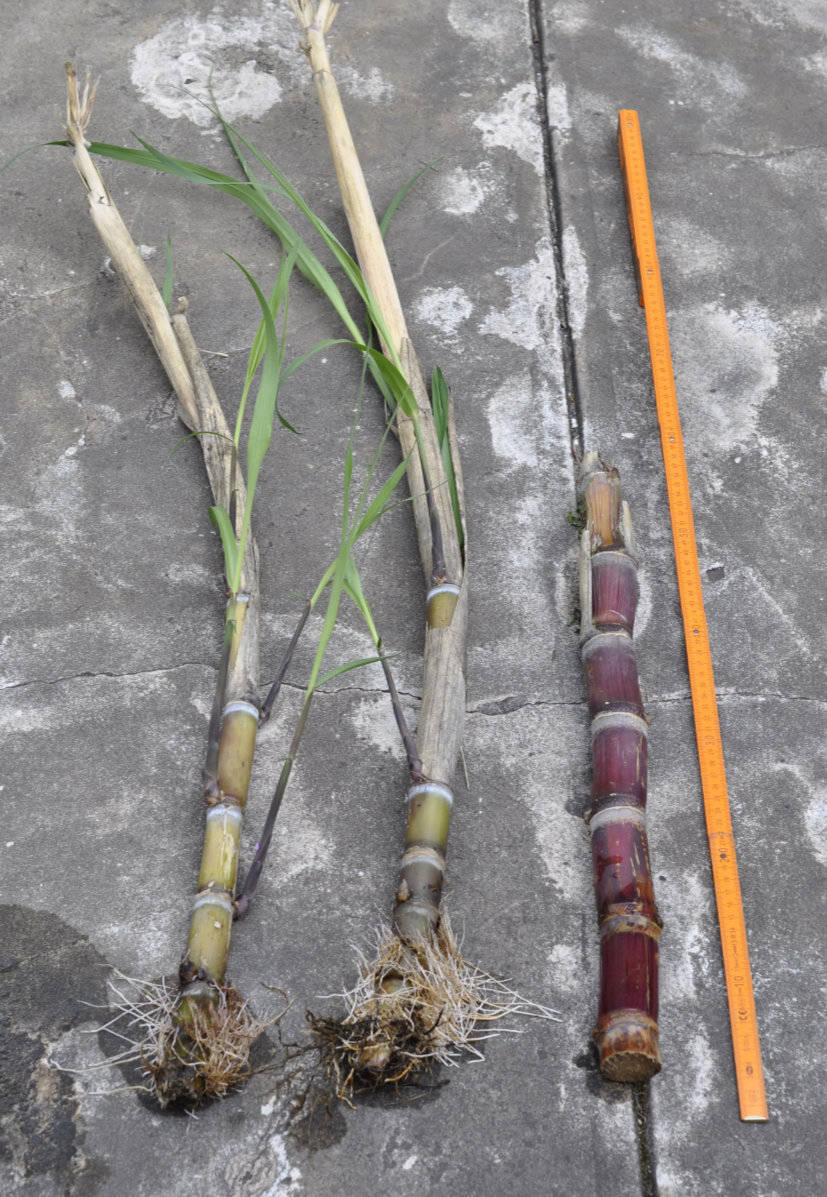
The pieces below arose from when really strong winds took down some canes some months ago. I lopped off the tops and stuck them in a container of water to grow on, and it was only later that I thought to make a blog post out of them. Because of that, I don’t have any ‘before’ shots unfortunately, but here they are some time later — the ruler is a metre long, and all green growth occurred after placing them in water:
copyright © Kristi Ellinopoullos
The cultivars are not known but the two brown-green pieces on the left are what I call Cultivar 1 and the mahogany-red piece on the right is what I call Cultivar 2. Cultivar 1 was given me by Pete of Italian descent, and Cultivar 2 was given me by Albert from Lebanon — hello fellas if you’re reading this!
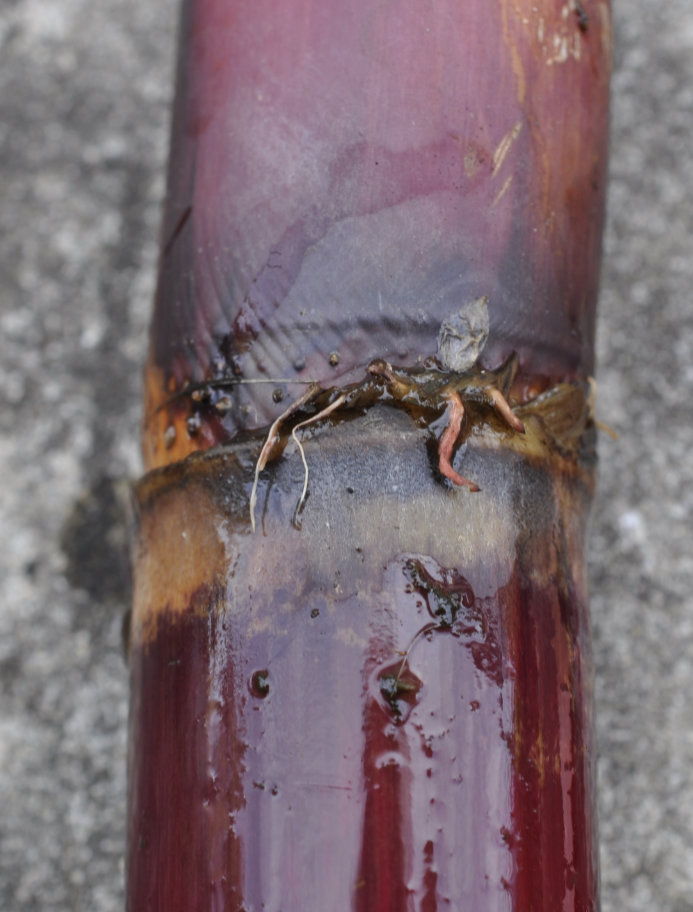
The red piece looks like it went nowhere all this time, but in this closeup very young developing roots are clearly visible:
copyright © Kristi Ellinopoullos
I sold all these pieces to Tristan (hello Tristan if you’re reading, and thank you!) like this and don’t have follow-up photos on how Cultivar 2 progressed. So continuing on with just the Cultivar 1 pieces which had a bit more going on at time of these photos…
Here are both a secondary shoot and roots developing (I do find Cultivar 1 produces secondary shoots far, far more than Cultivar 2):
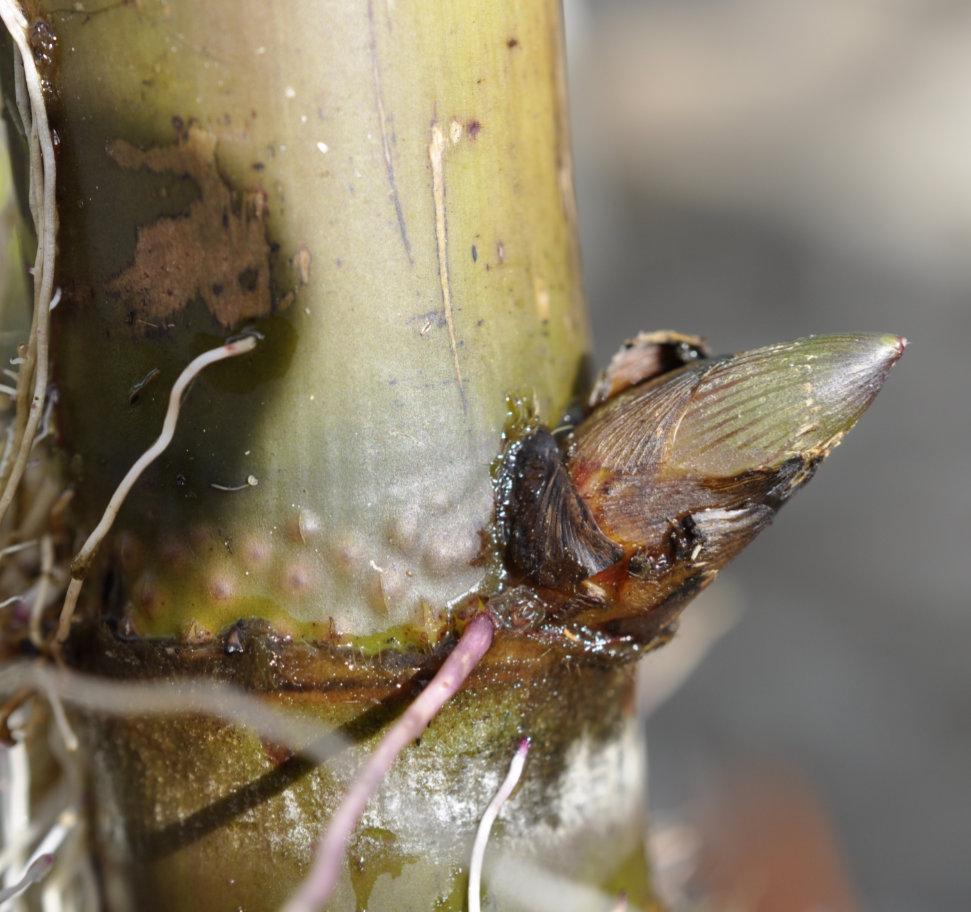
copyright © Kristi Ellinopoullos
Here is a more advanced secondary shoot:
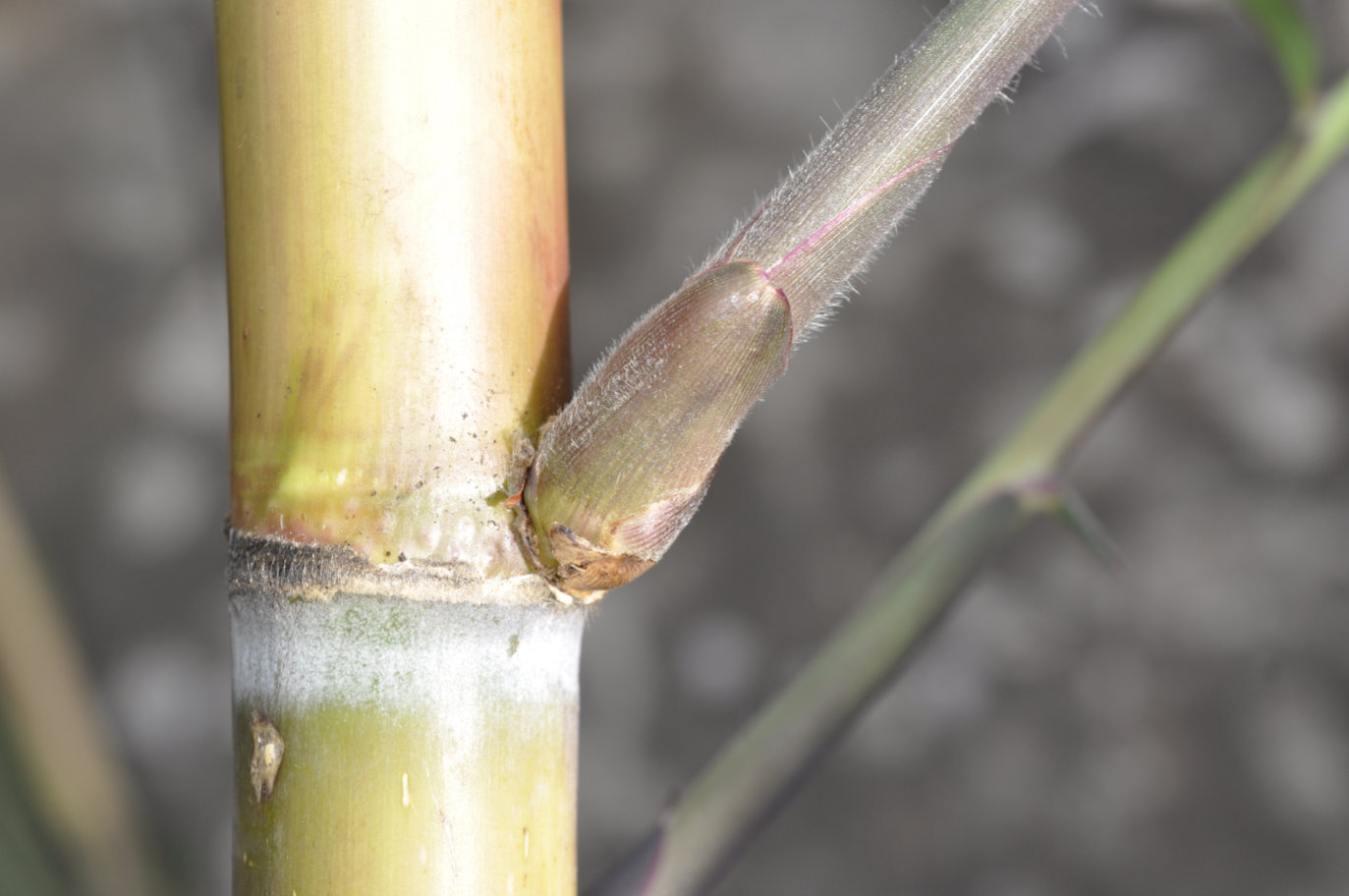
copyright © Kristi Ellinopoullos
Multiple secondary shoots along a stem:
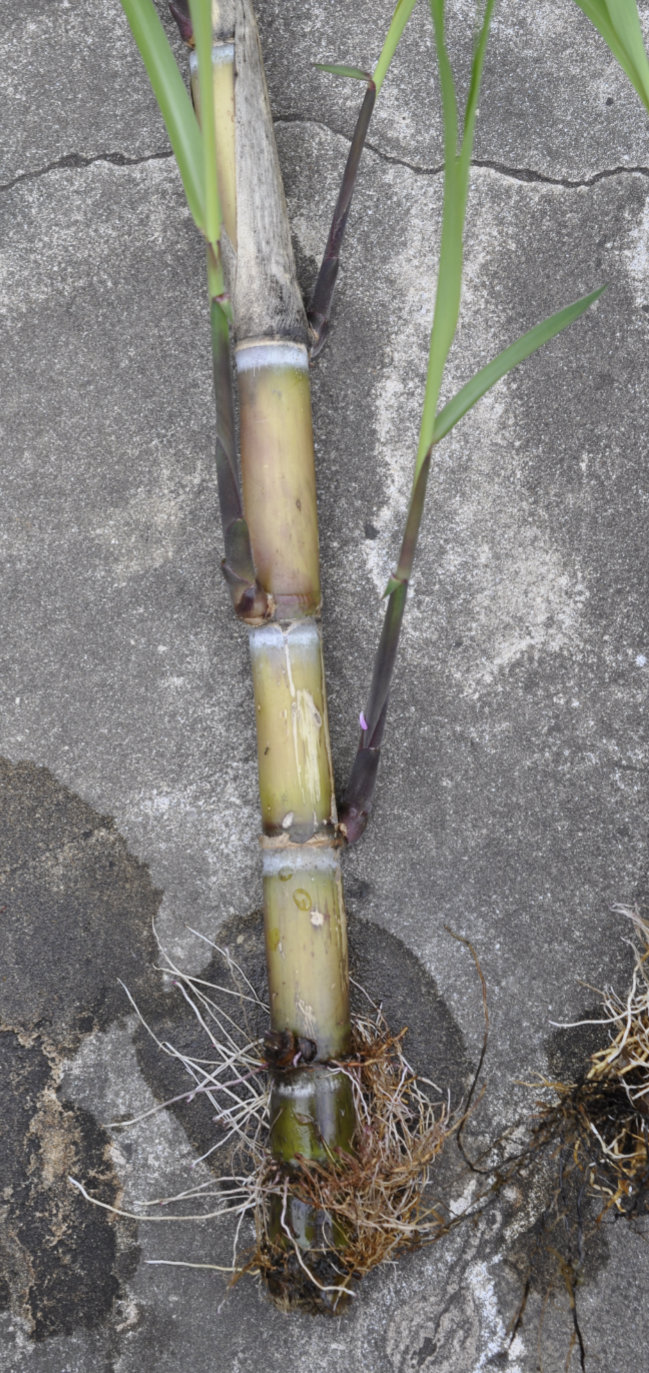
copyright © Kristi Ellinopoullos
And roots galore:
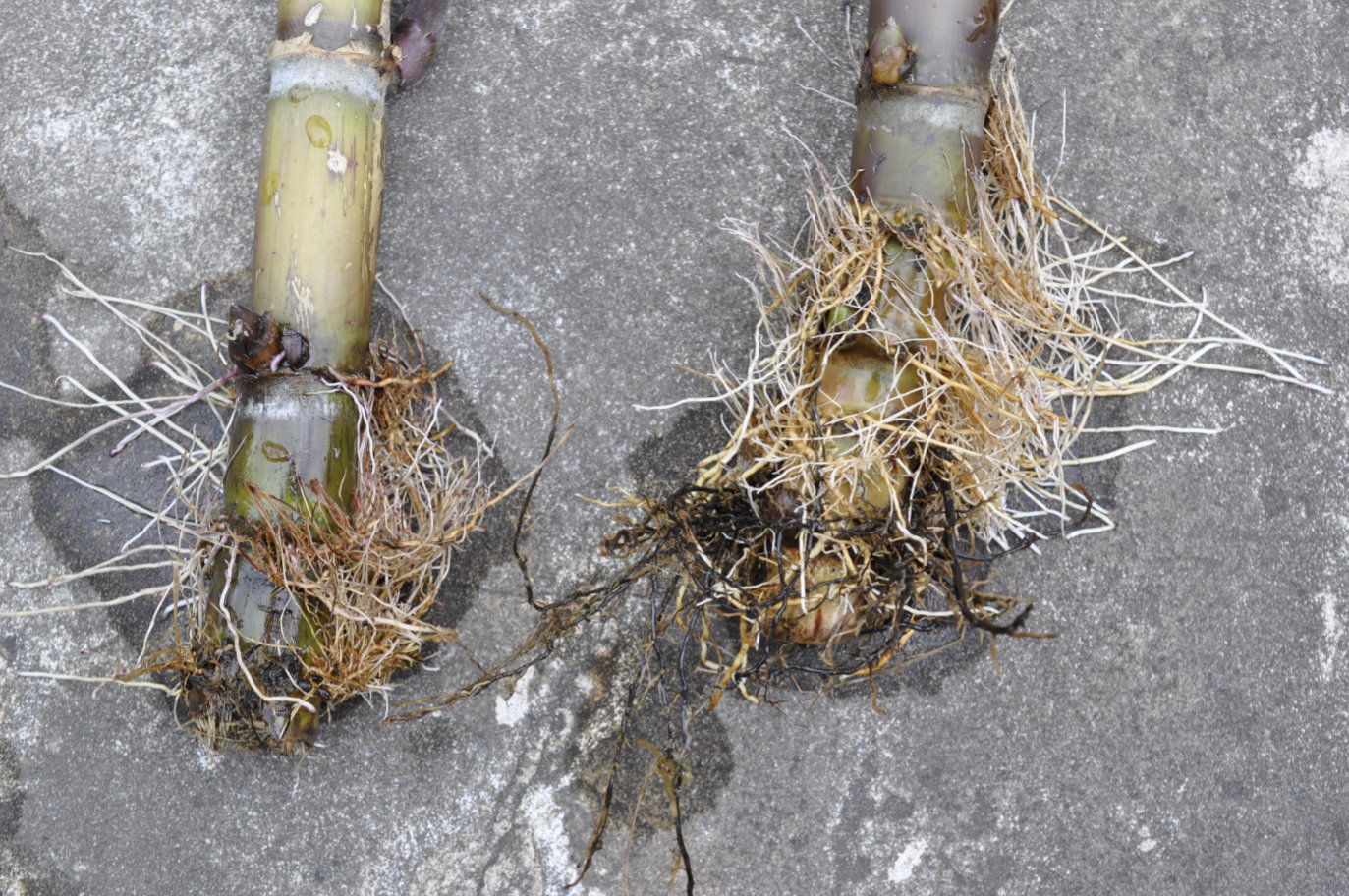
copyright © Kristi Ellinopoullos

Related Products
Leave a Comment