













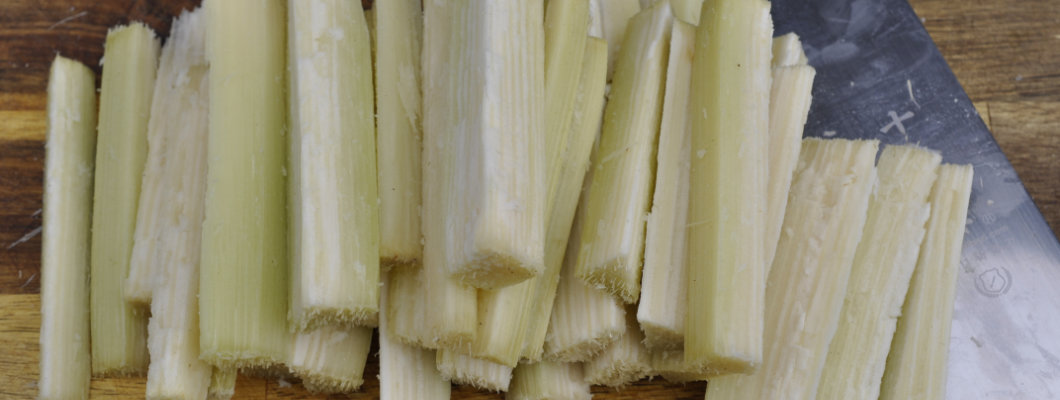
Title image above is copyright © Kristi Ellinopoullos
First published 21st February 2026
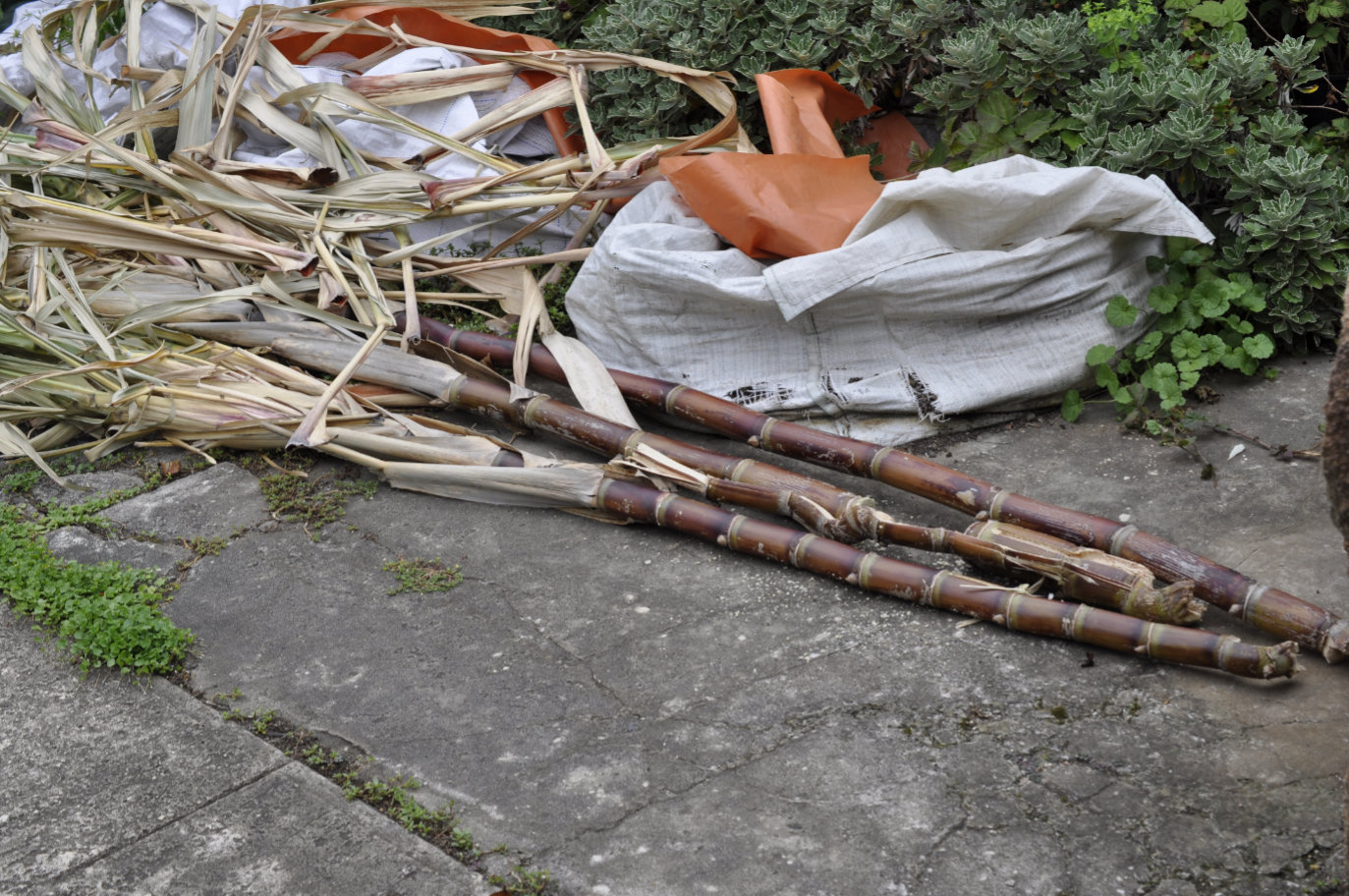
Strong winds once again brought down some especially tall and very mature canes of Cultivar 2 the other day, so what else could it be but chewing time!
And oh my, these were sweet juicy deliciousness! We’re talking juice running down your chin delicious!
copyright © Kristi Ellinopoullos
Canes are best harvested between twelve and eighteen months old, which these were.
copyright © Kristi Ellinopoullos
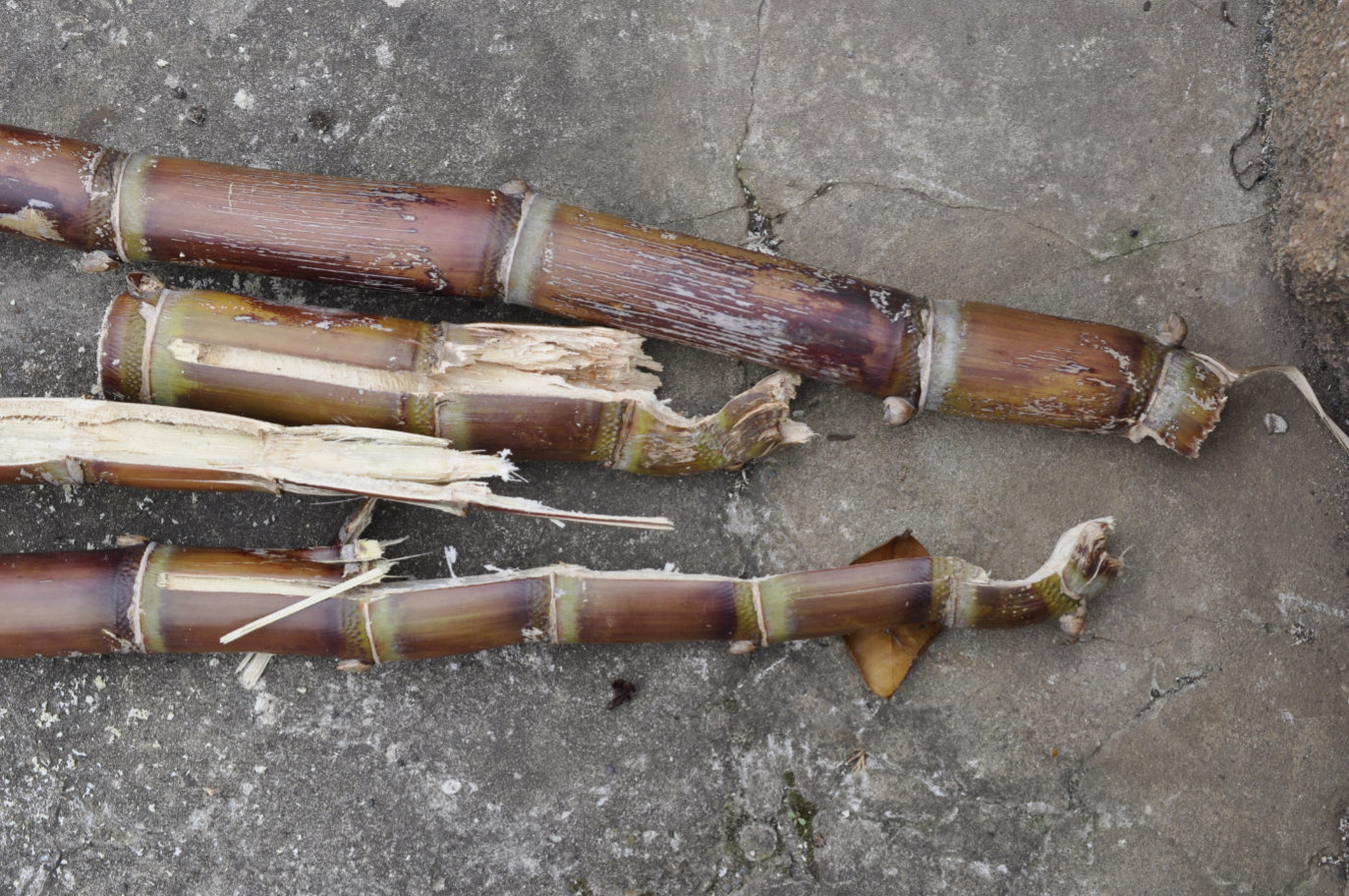
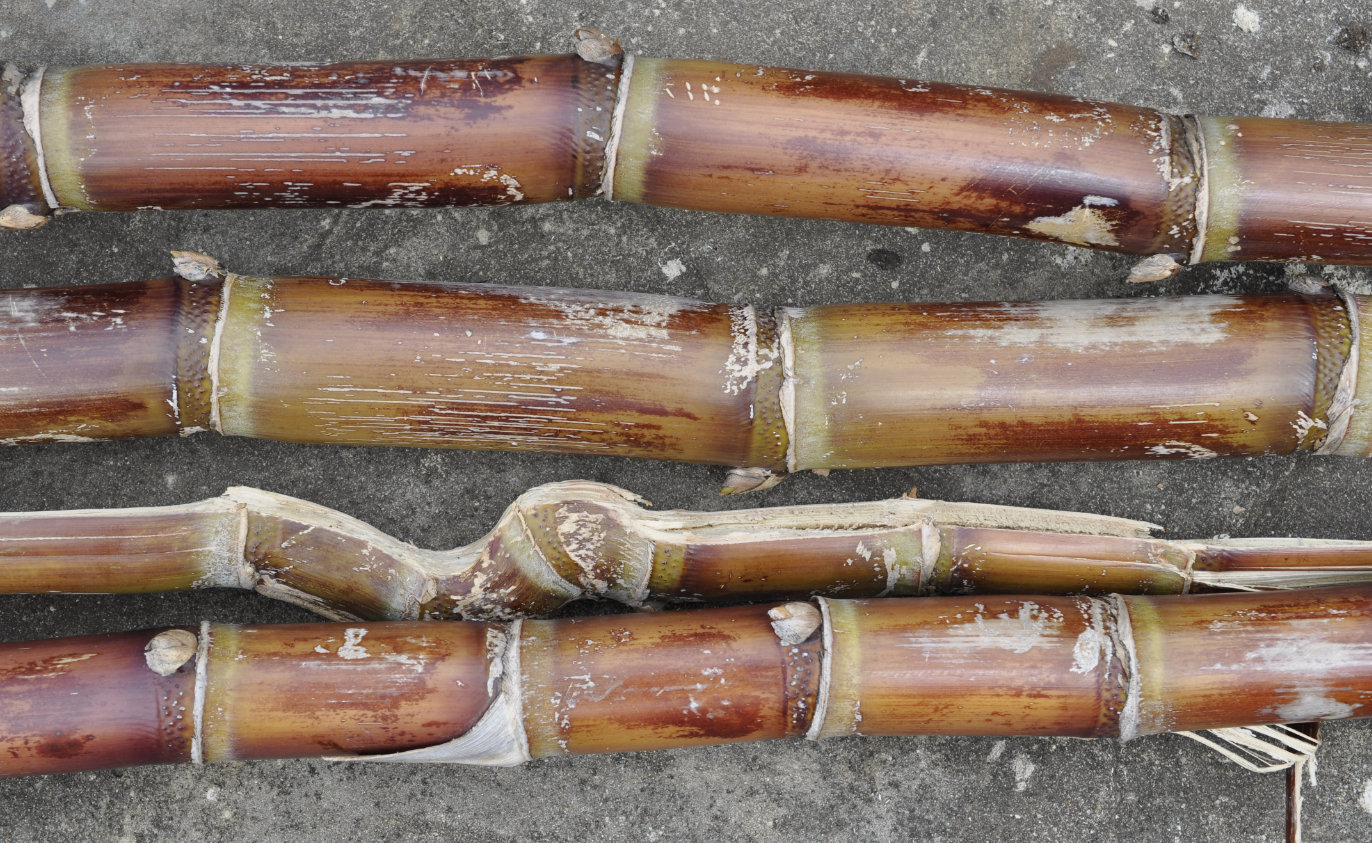
Here you can see how the internodes (the stem between the thick rings which are called nodes) can vary in size between individual canes, and even along a single cane.
copyright © Kristi Ellinopoullos
Choose whatever size you like, but do trim the nodes off, as this makes preparation for chewing much easier as you’ll see. I chose some of the longer internodes, which were about 15 cm long and about 5 cm thick when finished:
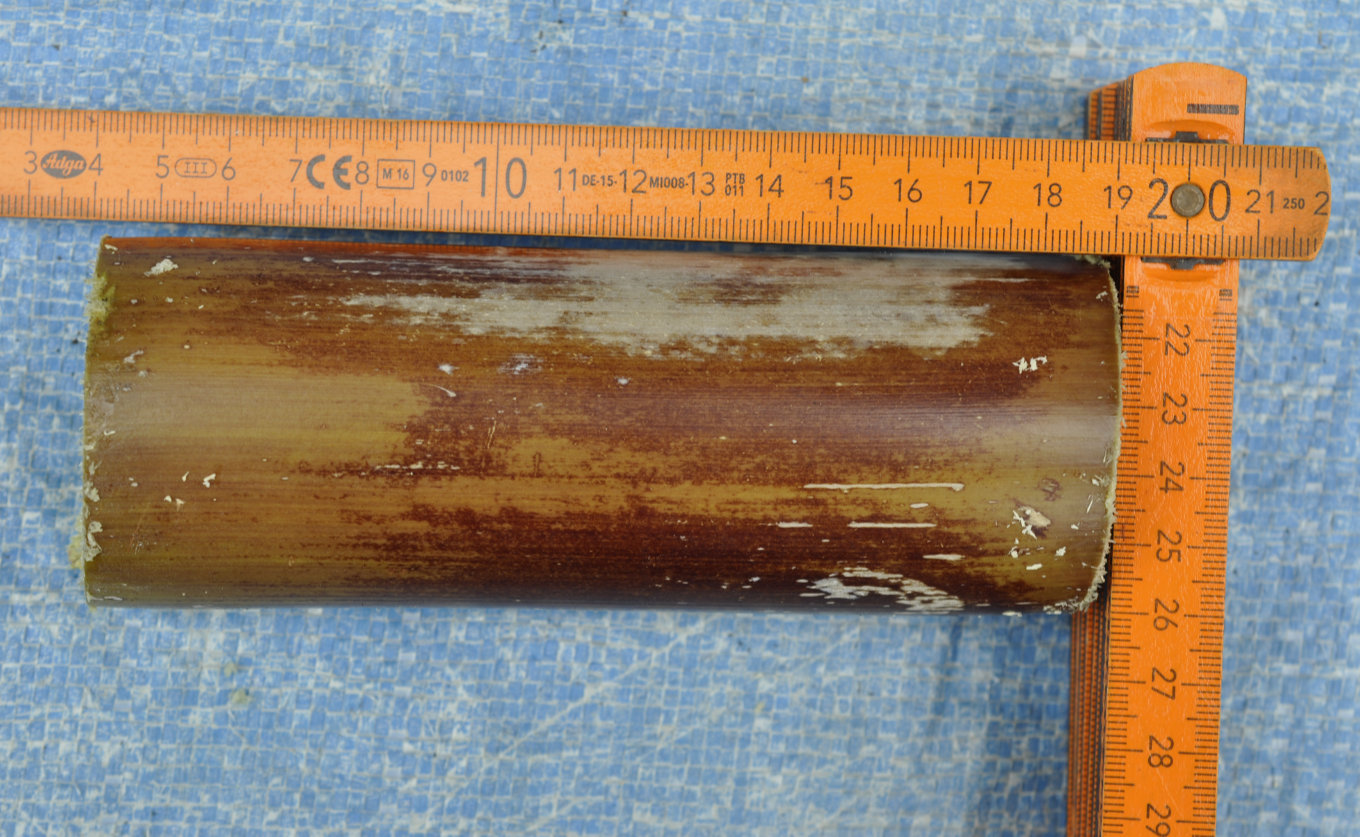
copyright © Kristi Ellinopoullos
The fibres run the length of the stem and the ones making up the outer protective layer are especially strong and tough. You need a saw or machete to cut across the stem horizontally.
But down the stem vertically is a completely different story! My caidao was perfect, but honestly, just about any strong large knife will do this next bit.
Please note: a caidao is not a cleaver, it just resembles one. Cleavers are for bones and tough cuts of meat. Caidaos are for vegetables and boneless soft cuts of meat. Don’t use a caidao to cut sugarcane across the grain!
Remove the outer, tougher layer from each piece:
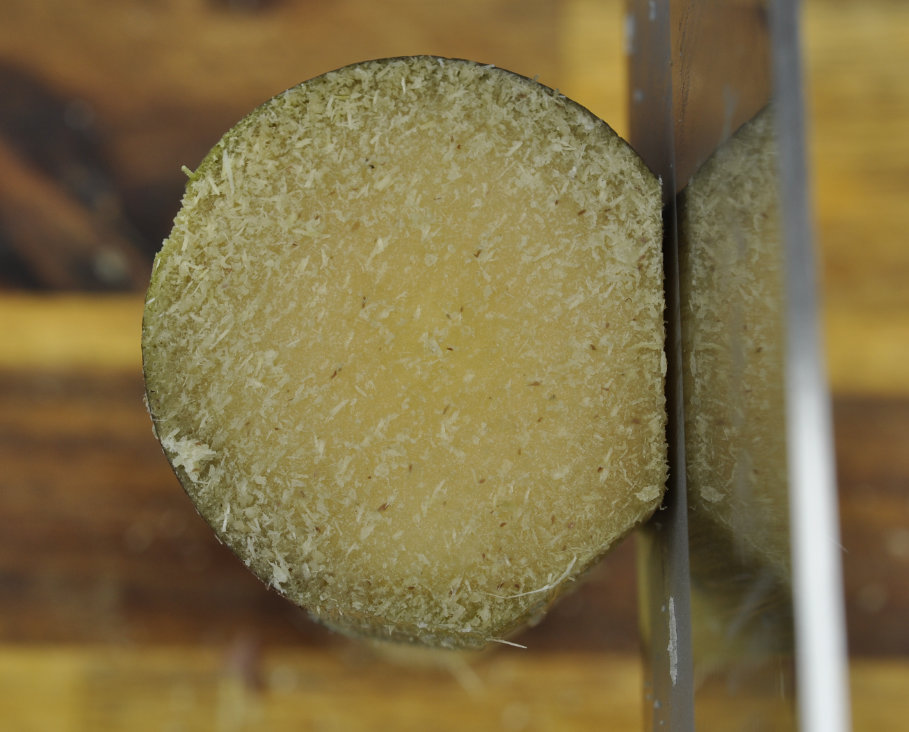
copyright © Kristi Ellinopoullos
The blade follows the fibre alignment without reistance and this is effortless — provided you removed those hard nodes beforehand:
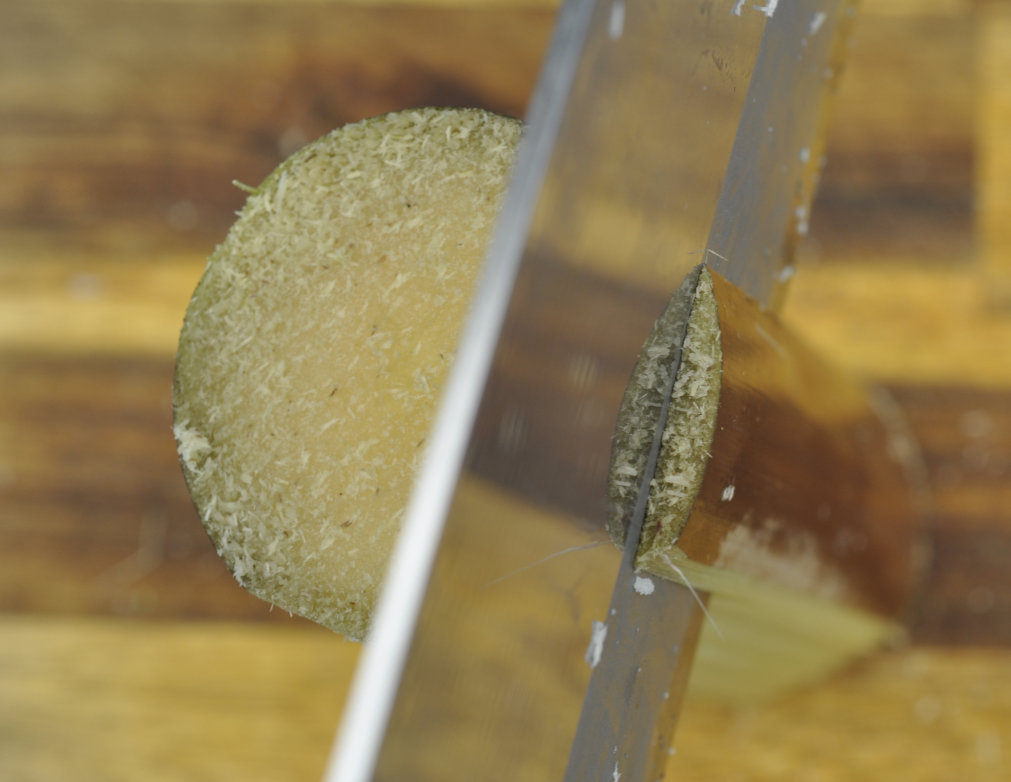
copyright © Kristi Ellinopoullos
Until you are left with this:
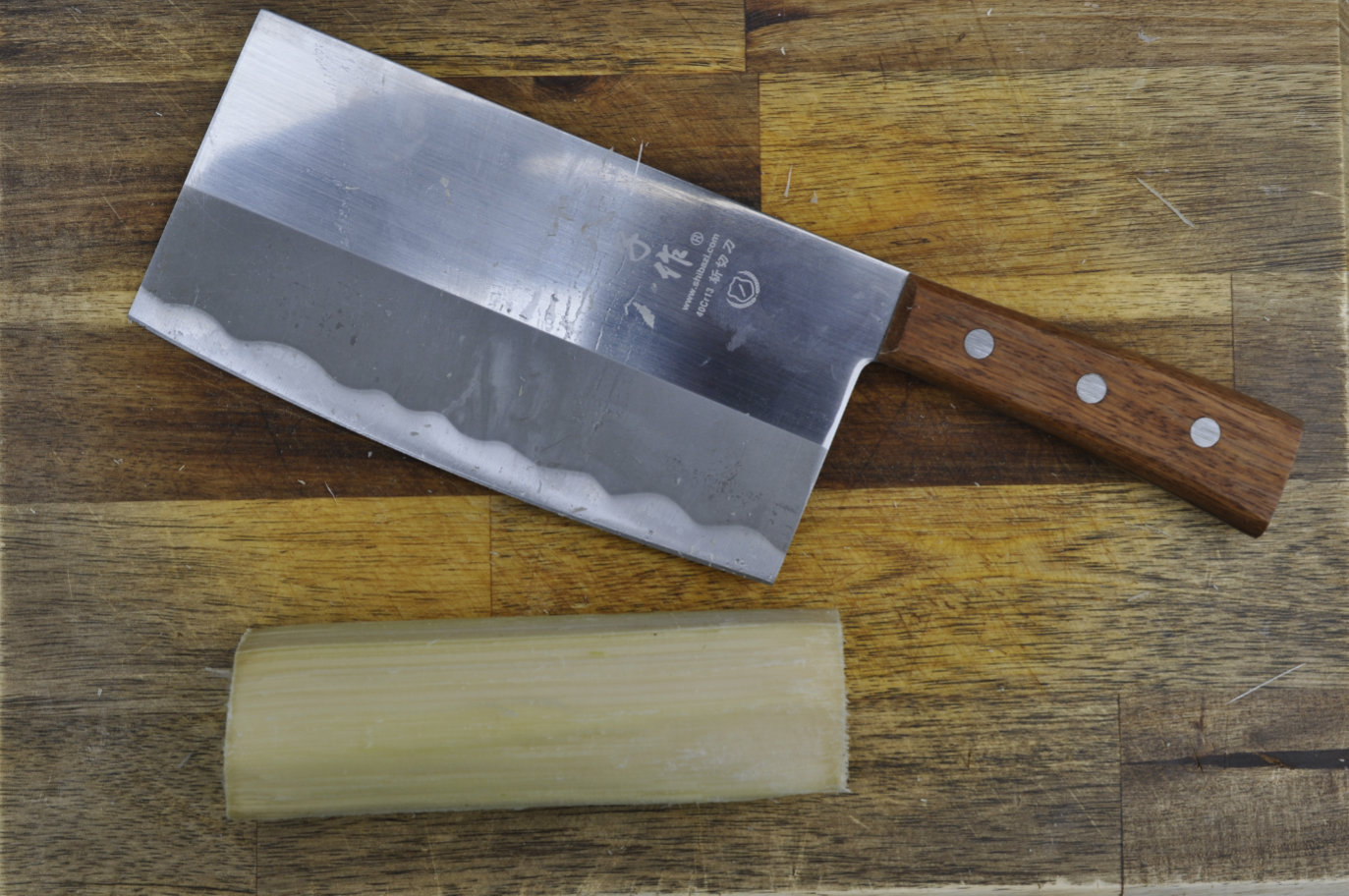
copyright © Kristi Ellinopoullos
Continue to follow the grain and cut the piece into thinner, easier to chew sticks. Long ones like these can be cut in half if you prefer to pop them completely in your mouth to chew. That’s hubby’s preferred method. I like to hold a longer one to chew one end and then the other. <shrug>
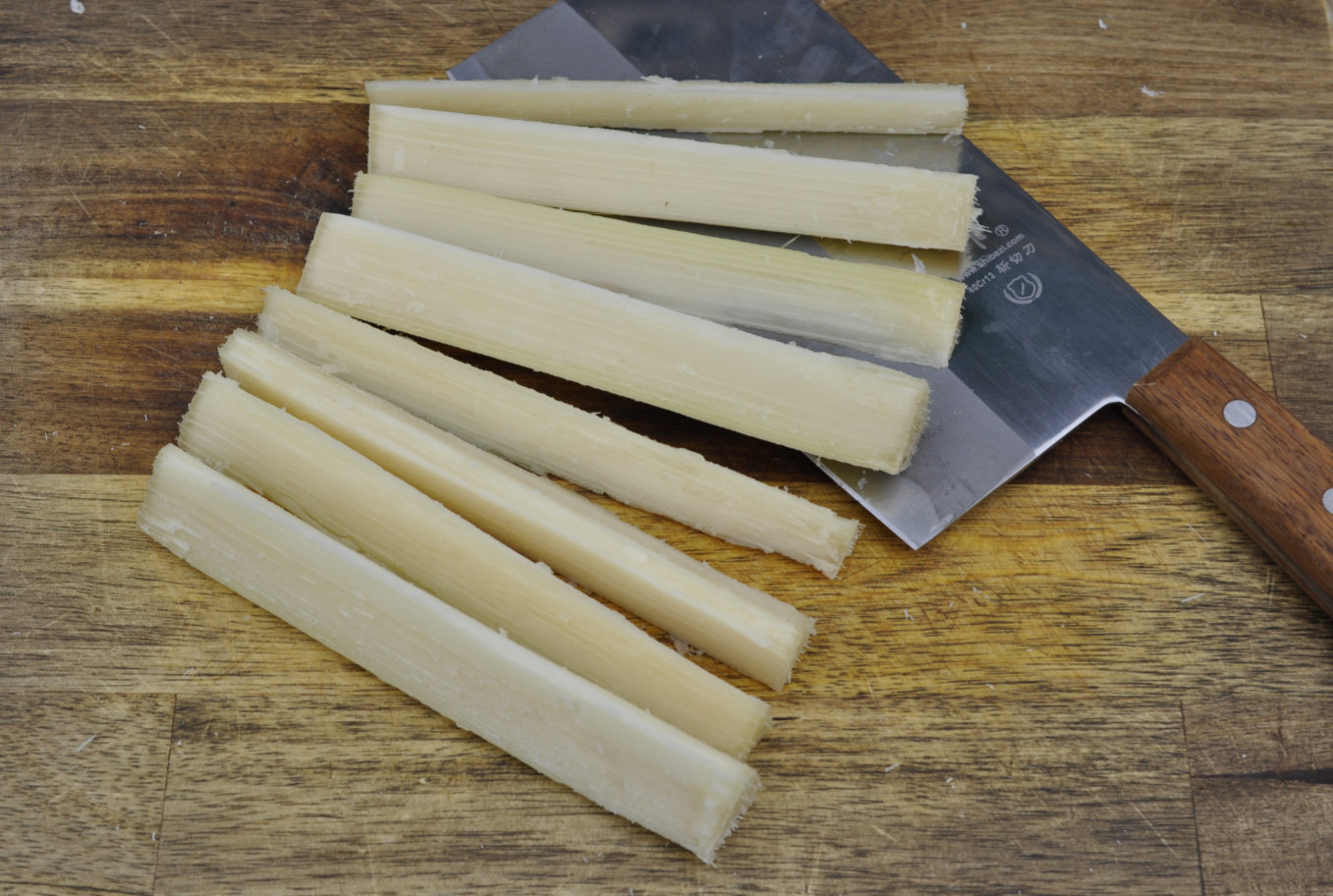
copyright © Kristi Ellinopoullos
Whichever you prefer, maybe don’t do it in polite society! And perhaps provide a bowl, for after the juices are savoured you do have a dry fibrous pulpy mass to dispose of somehow (the bottom piece in the photo below):
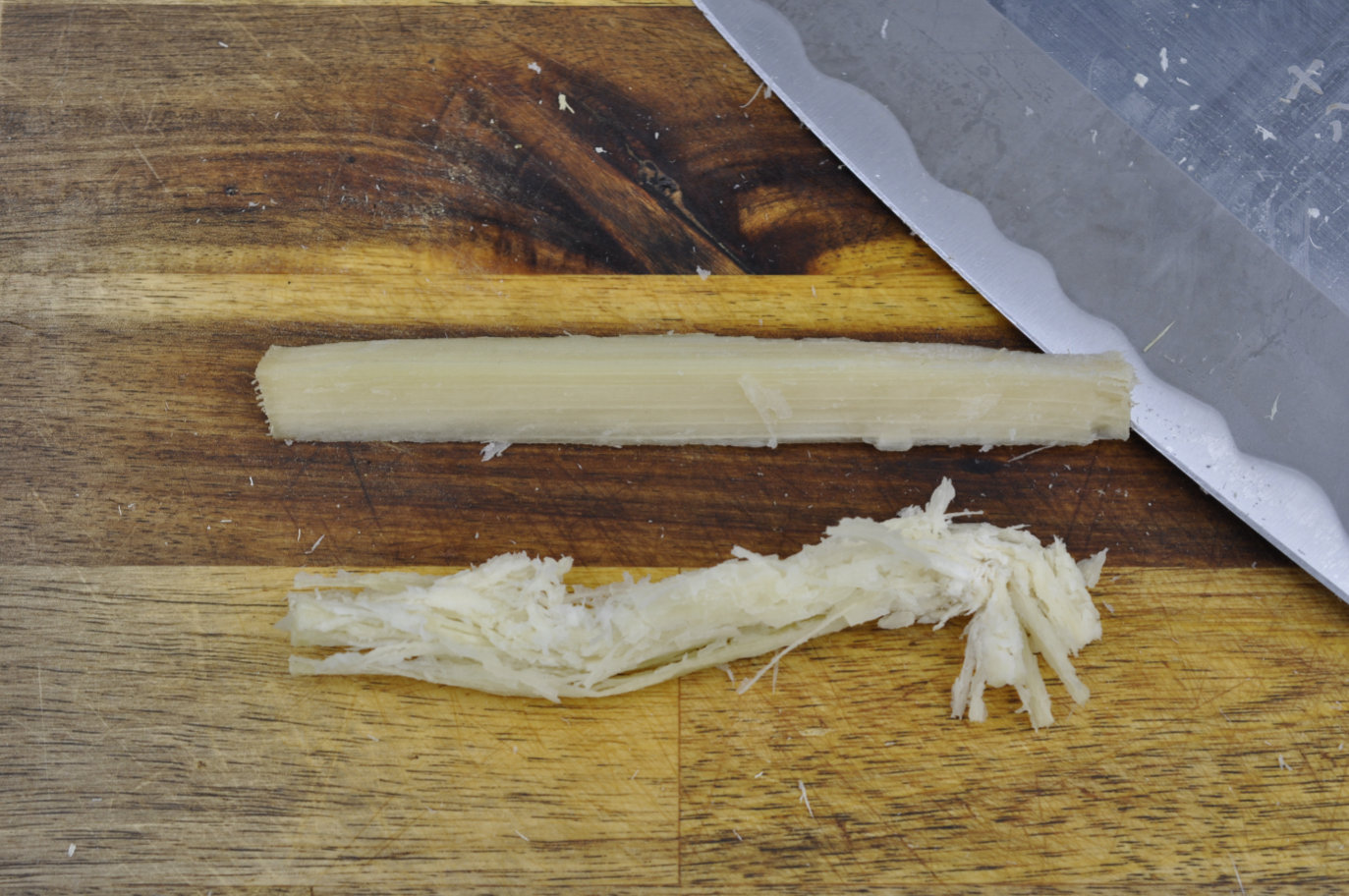
copyright © Kristi Ellinopoullos
Those were soooo good! After sampling Cultivar 2 I had to see how Cultivar 1 compared! (Topmost in photo below.)
The stem I chose had smaller internodes:
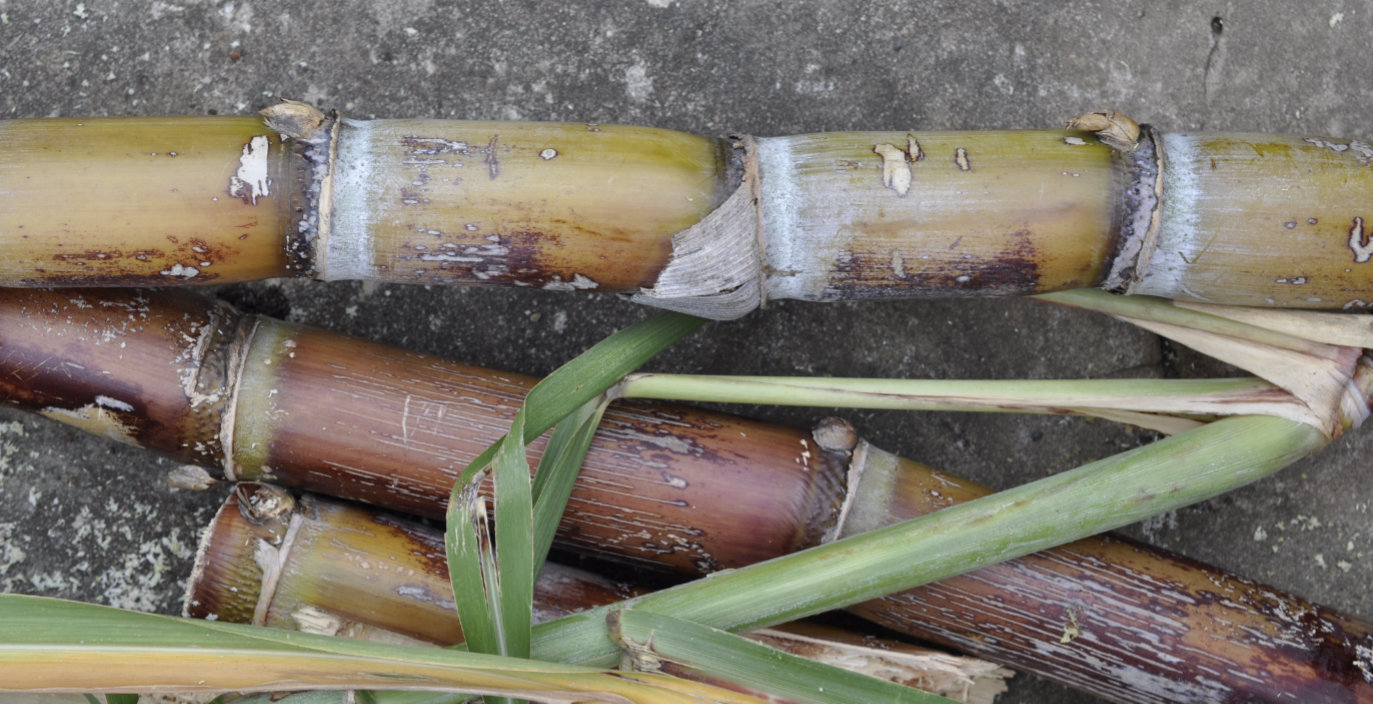
copyright © Kristi Ellinopoullos
Finished pieces were about 9-10 cm tall and about 4.5 cm thick:
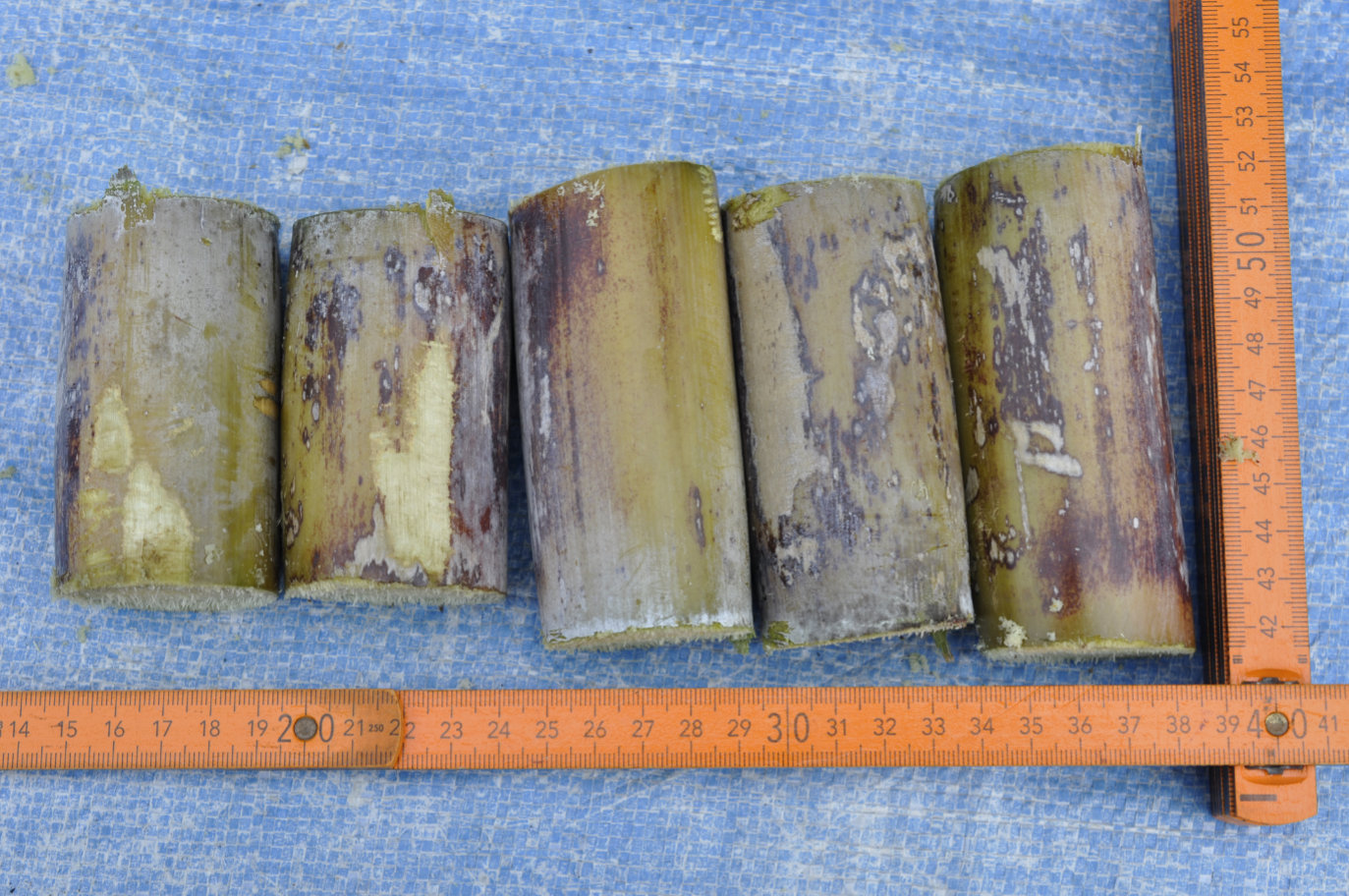
copyright © Kristi Ellinopoullos
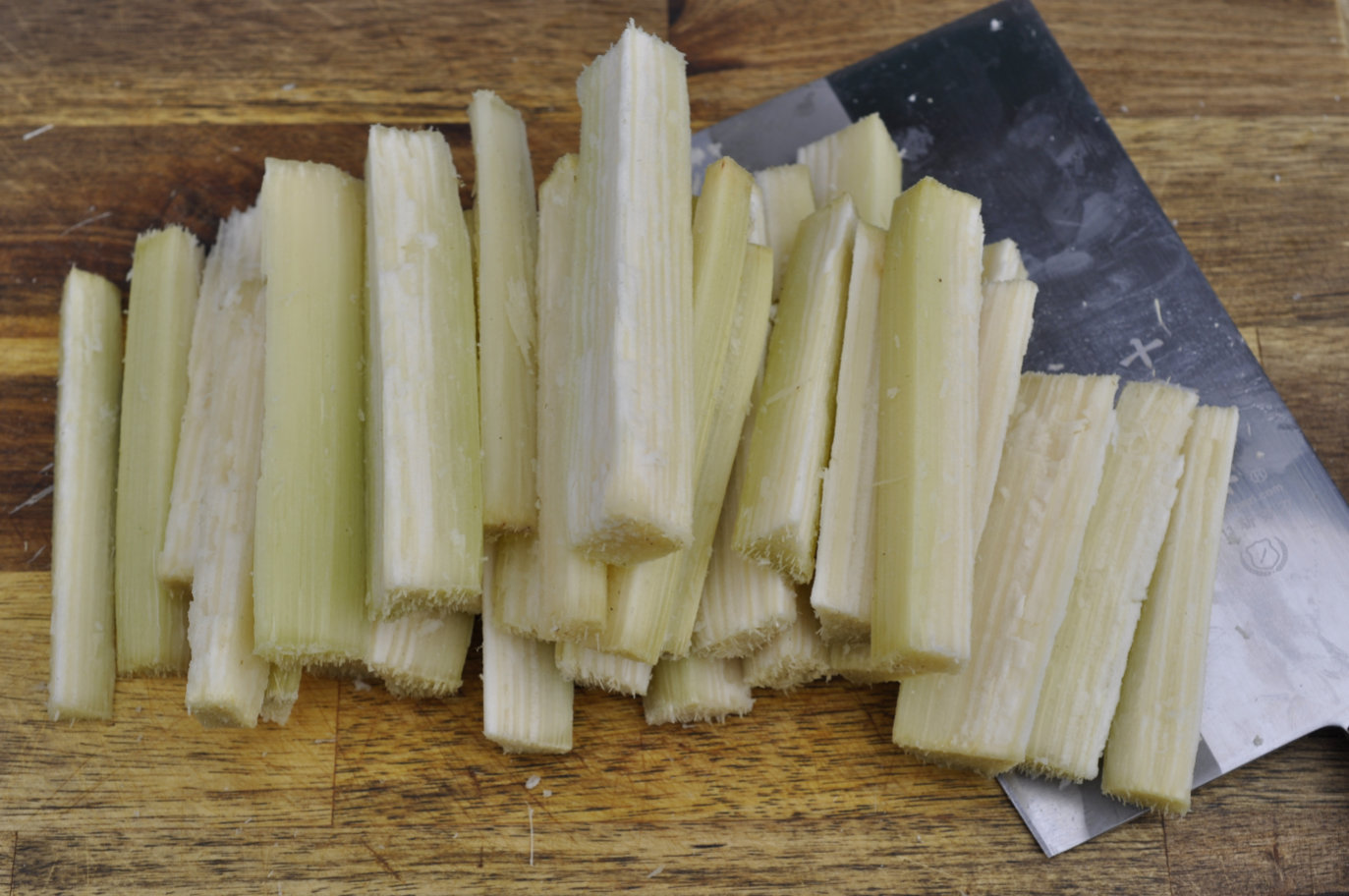
copyright © Kristi Ellinopoullos
These too were just as juicy and delicious! But a touch higher in the fibre:juice ratio compared to Cultivar 2 — which I predicted as the pieces felt lighter/less dense than those of Cultivar 2.
Whether because the cane was younger, or less fertilised, or just down to the cultivar itself I can’t say, but taste wise it was just as superb as Cultivar 2, without a doubt.
Sugarcane juice is not pure sucrose — it is nothing like some thick sickly sweet sugar syrup you may imagine it to be. To get that you need to do this, and you need a lot of raw cane to get even a small amount of syrup.
Sugarcane juice is very much juice, very liquid, extremely palatable, surprisingly refreshing for something full of sugar, and with nutrients such as iron, calcium, magnesium and potassium.
Those chewing sticks are more-ish as!

Related Products
Leave a Comment