






- Stock: In Stock
- Model: sugarcane-2-sett
Family: Poaceae (the grass family: includes lawn grasses, bamboos, cereals, lemon grasses)
Genus: Saccharum (includes many sugarcanes)
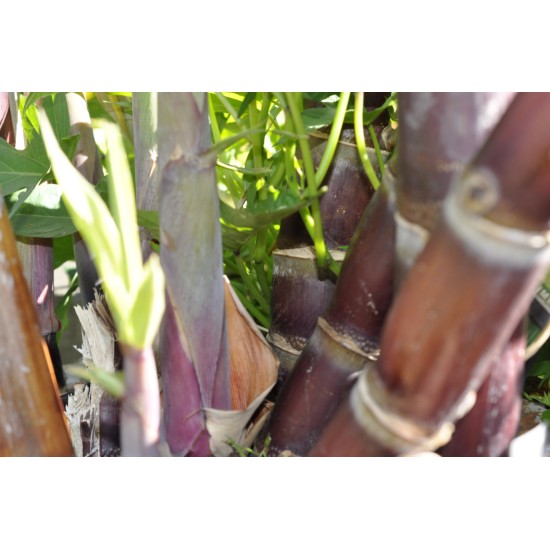
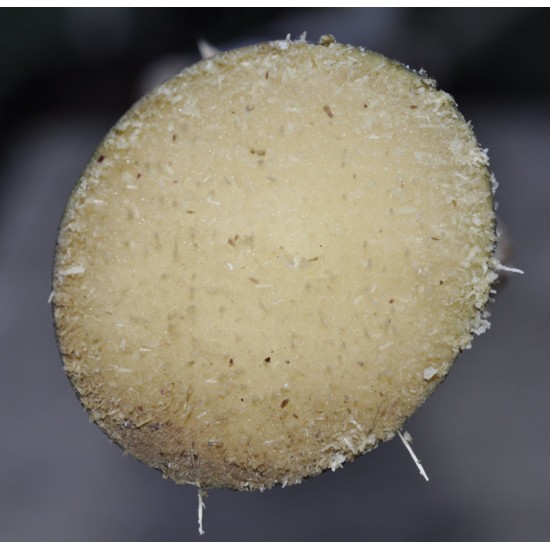
Botanical/Binomial Name: Saccharum sp. Ancestry of this cultivar unknown. Likely to be Saccharum officinarum, but could be a hybrid.
Meaning of Name:
Saccharum, from Latin saccharum (‘sugar’); and
officinarum, from Latin officīnārum (‘of or belonging to an officīna’, the medicinal storeroom of a monastery): an ingredient in medicinal preparations
Common Names: Sugarcane, Sugar cane
Botanical Characteristics: Herbaceous | Perennial | Evergreen | Frost tender
Propagation: Stem cuttings
Item Description:
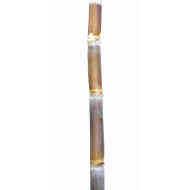
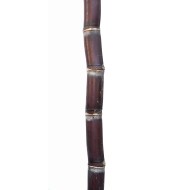
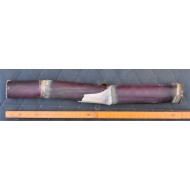
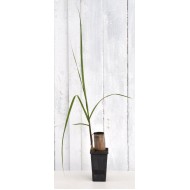
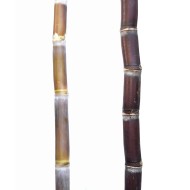
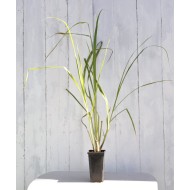
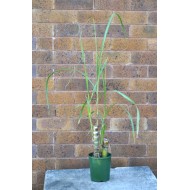
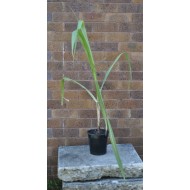
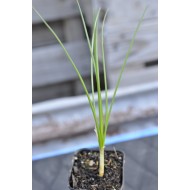
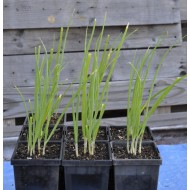
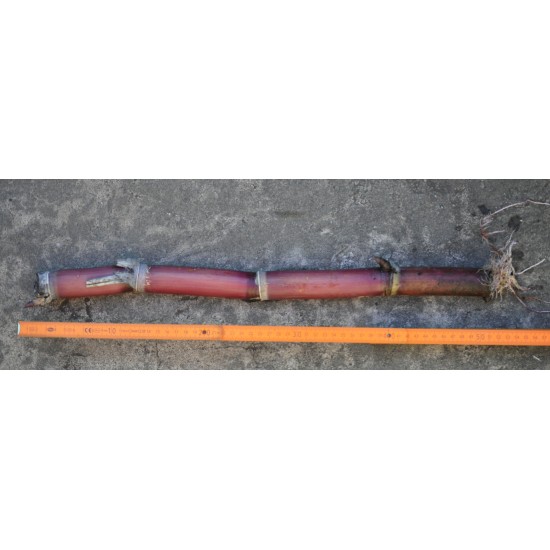
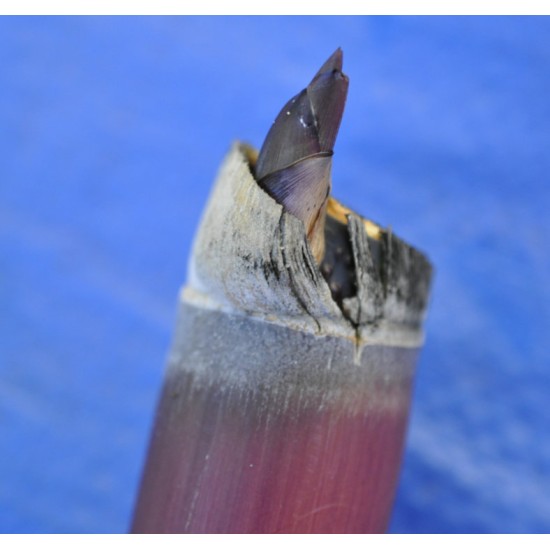
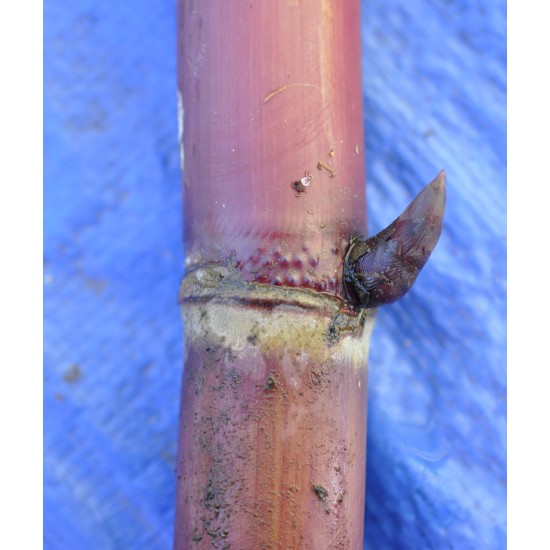
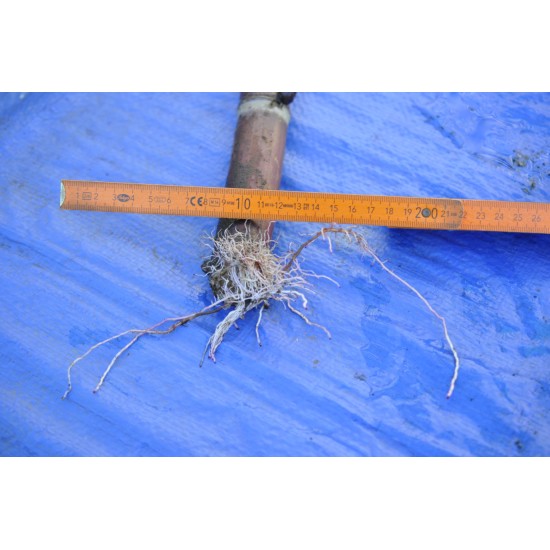
The first four photos are of the exact settling you will receive. A ‘settling’ is a rooting, shooting stem cutting. (The stem cutting prior to rooting and shooting is called a ‘sett’.)
This is one rooted and shooting settling of an unknown sugarcane cultivar I call Cultivar 2.
This piece is about 540 mm from the tip of the top shot to the bottom of the roots.
This is from a sett left in a bucket of water to root and shoot, and it has never been potted. Sent as is, with the roots in moist fine peat coir for protection.
There are two shoots developing: one at top and one from the first node above the rooting node.
When a local customer now-plant-swapping-pal — hi Steve! — came by back in May 2026 for yacon, and saw this sugarcane growing, I offered to cut some then and there on the spot.
We’re standing there stripping and eating it together, and he could not believe how tasty and juicy this was! He said he had eaten plenty of sugarcane up in Queensland in his time, and declared this tastier even than those. He said he never would have thought he’d ever taste such sugarcane in Wollongong!
Of courwse he took some away with him, and this very piece listed here is a leftover piece from the, um, sampling session that day.
We didn’t try Cultivar 1 that day, so I don’t know his opinion on that one. But I find it just as juicy (we’t talking dribbling down the chin) though maybe a touch more fibrous.
Plant Description:
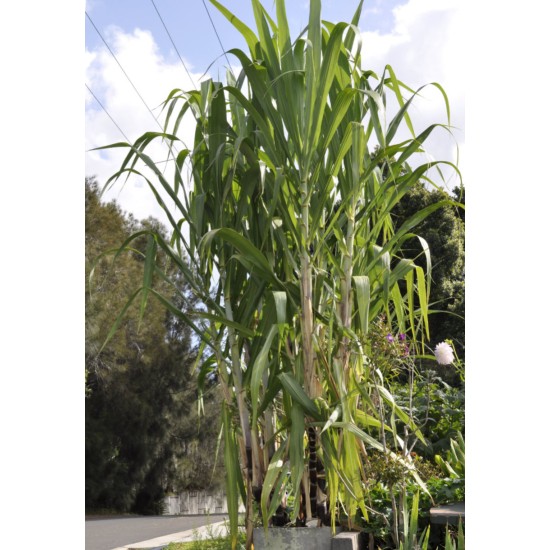
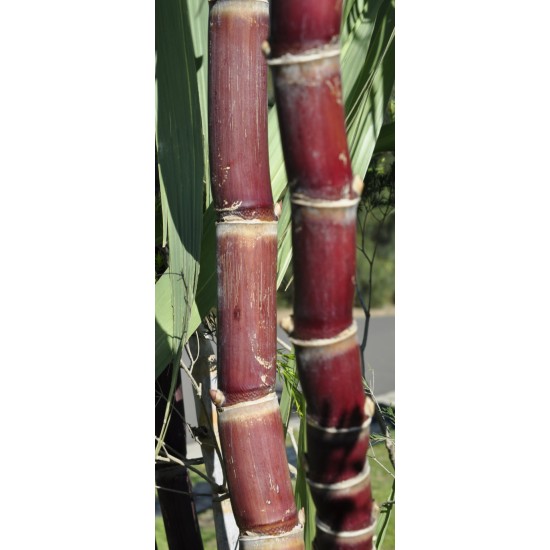
This is a tall perennial clumping grass reaching three metres or more at maturity. The leaves bend over and take on a fountain-look like lemongrass, but much much taller and more visually impressive with its highly ornamental stems!
The mother plant was given to me by my Lebanese friend Albert, but the cultivar is not known unfortunately.
Sugarcane is a C4 plant and one of the most efficient photosynthesisers around. Not too surprising when photosynthesis is the conversion of CO2 into sugars, and this plant is called sugarcane!
Growing Information:
Sugarcane, like so many grasses, is a tough and hardy plant. It will not survive climates with heavy frosts, but is otherwise an easy-care plant which will grow in a range of soils from rubbish to highly fertile. Of course the more fertile, or fertilised, your soil, the higher the quality and quantity of sugar production!
Regular fertilising will provide the nutrients this fast-growing sugar-factory needs for good health and to produce and store copious amounts of sugar.
This is a clumping perennial with tall, thick ornamental stems like clumping bamboos, and can be grown with similar end-goals in mind such as screening or an aesthetic clump.
Propagation is via stem cuttings with at least one or two nodes, which can be done in any of three ways:
1. submerse the stem in a glass of water, such that at least one node is permanently covered;
2. plant the stem such that at least one node is covered; or
3. bury the stem shallowly, but fully, and horizontally in the ground. Shoots and roots will arise from all nodes along the stem.
It can take from two weeks to two months for anything to show, depending on the time of year. If new to this, I’d recommend the glass of water method, partly for your own reassurance the stem is not rotting, and partly because it is so much fun to see the roots developing! This is also the best way to grow a rooted piece during the colder months, as this can be done indoors anywhere it’s warm.
Local pick-up is welcome — we’re in Gwynneville, near Wollongong University.
Pick-up is by mutual arrangement please, as we don’t have a shopfront.
Having said that, we are always here and more often than not can easily fit in with whichever day and time suits you best!
Feel free to suggest preferred pick-up time(s) in the comments box during checkout and we’ll reply as soon as we see the notification.
Especial Note Regarding Large Air-Pot® Orders
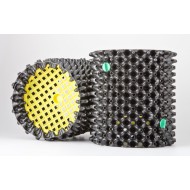
Depending on the order, we may suggest that large Air-Pot® orders are best sent directly to you from the warehouse.
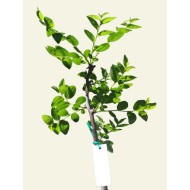
Especial Note Regarding Jujube Trees
When posting out bare-rooted jujube trees, we routinely trim them to fit the box and keep postage costs to a minimum. These trees are typically knee-high when planted out, though some may be smaller.
This of course doesn’t apply for pick-ups, and in fact we will set aside the tallest trees specifically for this purpose. These trees can often be hip-high, and sometimes taller again.
Please note that this is not a guarantee, as heights of different cultivars can differ from year to year.