




Title image above is copyright © Kristi Ellinopoullos
First published 1st February 2025
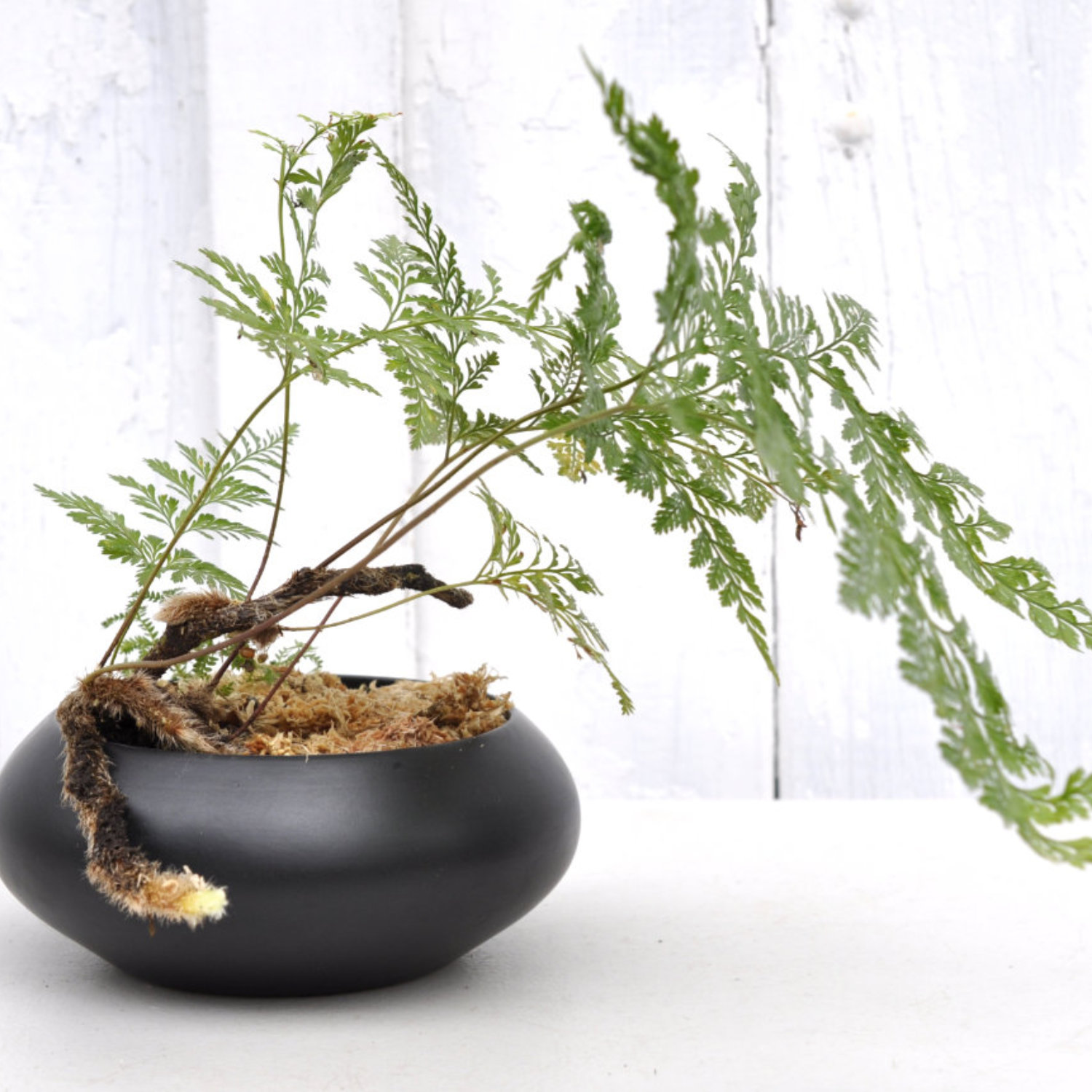
Rabbit’s Foot Fern (Davallia sp.) with Selaginella kraussiana
Rabbit’s Foot Fern (Davallia sp.)
Family: Davalliaceae
Genus: Davallia (includes rabbit's foot ferns — Davallia is the sole genus of Davalliaceae)
Botanical/Binomial Name: Davallia sp.
Meaning of Name:
Davallia, after the 18th century Swiss botanist E. Davall; and
species unknown
Common Names: Rabbit’s foot fern, Hare’s foot fern, Deer’s foot fern, Squirrel’s foot fern, Ball fern
Botanical Characteristics: Herbaceous | Creeping Perennial | Rhizomatous | Evergreen | Frost tender
Propagation: Division of rhizomes | Layering
Selaginella kraussiana
Family: Selaginellaceae (the spikemoss or lesser clubmoss family)
Genus: Selaginella (includes spikemosses — Selaginella is the sole genus of Selaginellaceae)
Botanical/Binomial Name: Selaginella kraussiana
Meaning of Name:
Selaginella, from Latin selago (‘plant resembling the savin juniper Juniperus sabina’); and
kraussiana, after Krauss, possibly the German scientist and collector Christian Ferdinand Friedrich Krauss (1812-1890) + Latin -iana (neuter plural of -ānus, a suffix denoting a collection of things specific to a person or place): Krauss’, of Krauss
Common Names: Krauss’ spikemoss, Krauss’ clubmoss, Green clubmoss
Botanical Characteristics: Herbaceous | Creeping Perennial | Evergreen | Spore-forming | Frost tender
Propagation: Division of clumps | Layering
Item Description:
A beautiful matte black ceramic pot containing a rabbit’s foot fern (species unknown) potted in sphagnum moss and with the spikemoss groundcover Selaginella kraussiana for company.
The fern’s furry rhizomes will in time spread across the surface and over the sides of this pot, and fronds will grow from these rhizomes at all angles to make this quite a centrepiece.
The small Selaginella seen dangling down the side in the second photo will also spread across the surface and down the sides, and add to the overall effect again.
About the Ceramic Pot:
Dimensions of the matte black ceramic pot are 165 mm external diameter by 65 mm high.
This stylish piece is fully glazed and waterproof. There is no drainage hole, and this is not required for either species. All that is required is that the sphagnum moss be kept moist — simply wet gently whenever the surfasce is dry. A spray bottle is excellent for this, but please note you need to wet the surface, not simply mist it.
Plant Descriptions:
Davallia ferns are epiphytic (growing on trees without harming them) or epipetric (growing on the surface of rocks). They are especially known for their furry creeping rhizomes resembling animals’ feet, hence the ferns are often referred to as ‘rabbit’s foot fern’, ‘hare’s foot fern’, ‘deer’s foot fern’ , and ‘squirrel’s foot fern’. Another name is ‘ball fern’, after the rhizomes’ habit of growing over and around pots to create a ball-like shape.
This particular fern is growing in and on sphagnum moss, and only requires that the moss be kept moist as this Davallia species is an epiphyte. (A spray bottle is excellent for this, but ensure the moss is wet and not just misted.)
The rhizomes are aerial but some will root down into the moss for anchorage.
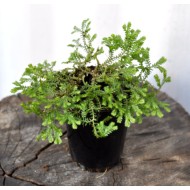
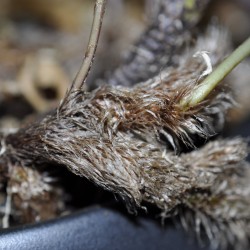
The complementing Selaginella kraussiana is a delightful little creeping plant which loves it moist and shady, and is the perfect companion for this fern. Its roots are also aerial and will only root shallowly into the surface for anchorage, and it even has a fern-like appearance, as seen in the last, close-up, photo of a different pot.
The bright greens of both species contrast beautifully with the matte black of the pot.
Growing Information:
Both Davallia sp. and Selaginella kraussiana are very low-care plants which require nothing more than a moist, shady environment and occasional light fertilising. Both will cover any moist shady patches with ease via their creeping nature.
Both plants are very easy to propagate by division and layering.
In the case of Davallia sp., break or cut a piece of rhizome containing at least one frond, and partially cover the rhizome with a moist well-draining medium. More fronds will appear as this rhizome settles, grows and spreads.
In the case of Selaginella kraussiana, simply break away a piece no matter how small, and lay on a moist, shady surface where it will readily take root, so long as it is kept moist.

Related Products
Leave a Comment